
Language
- 日本語
- English
- 简体中文
- 繁體中文
Here are some recommended sightseeing routes.
01
MODEL COURSE
Amagasaki Teramachi Seven Lucky Gods Pilgrimage ~ To Amagasaki Castle
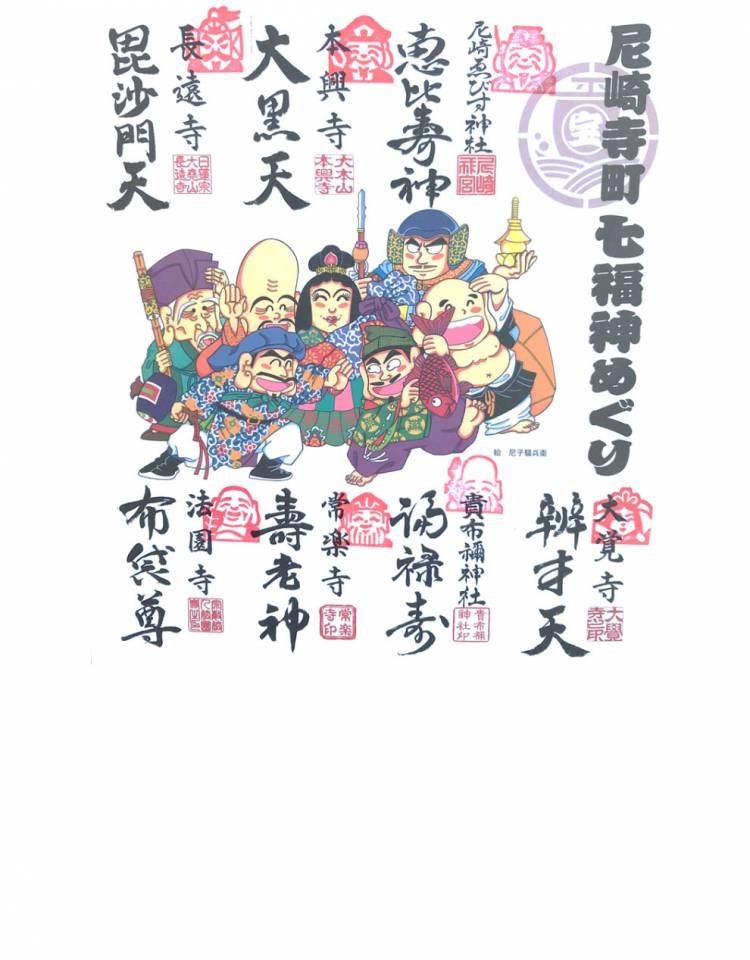
This tour takes you to seven shrines and temples in Amagasaki's Teramachi district, where you pray for blessings such as longevity, good fortune, and prosperity. As a memento of your visit, you can collect all seven stamps on a special commemorative paper. The tour concludes with a visit to Amagasaki Castle.
Hyogo (Amagasaki City)
12:00 START
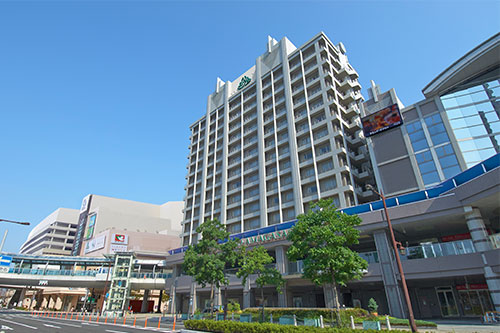
Hotel Vischio Amagasaki
We will leave the hotel and head to the JR Amagasaki Station (South Exit) rotary.
Approximately 13 minutes by bus (Platform 23, bound for Hanshin Amagasaki, northbound)
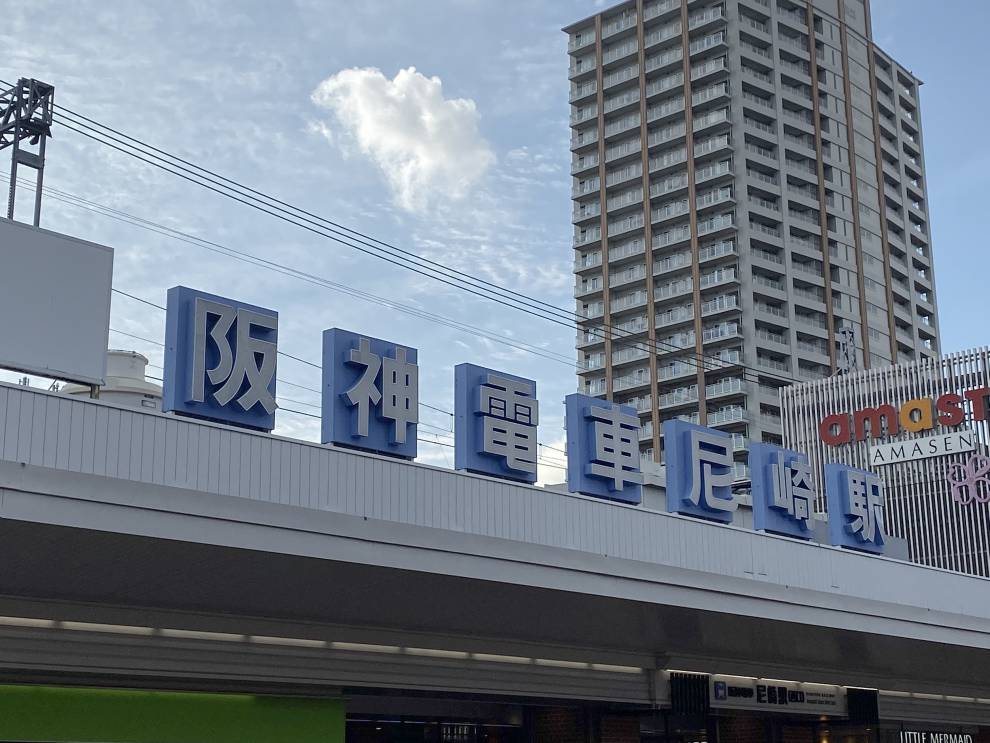
We have arrived at Hanshin Amagasaki Station.
Inside the Amagasaki Tourist Information Center, you'll find a wide selection of souvenirs, including local Amagasaki sake and sweets. I'll also pick up a map for the Seven Lucky Gods pilgrimage.
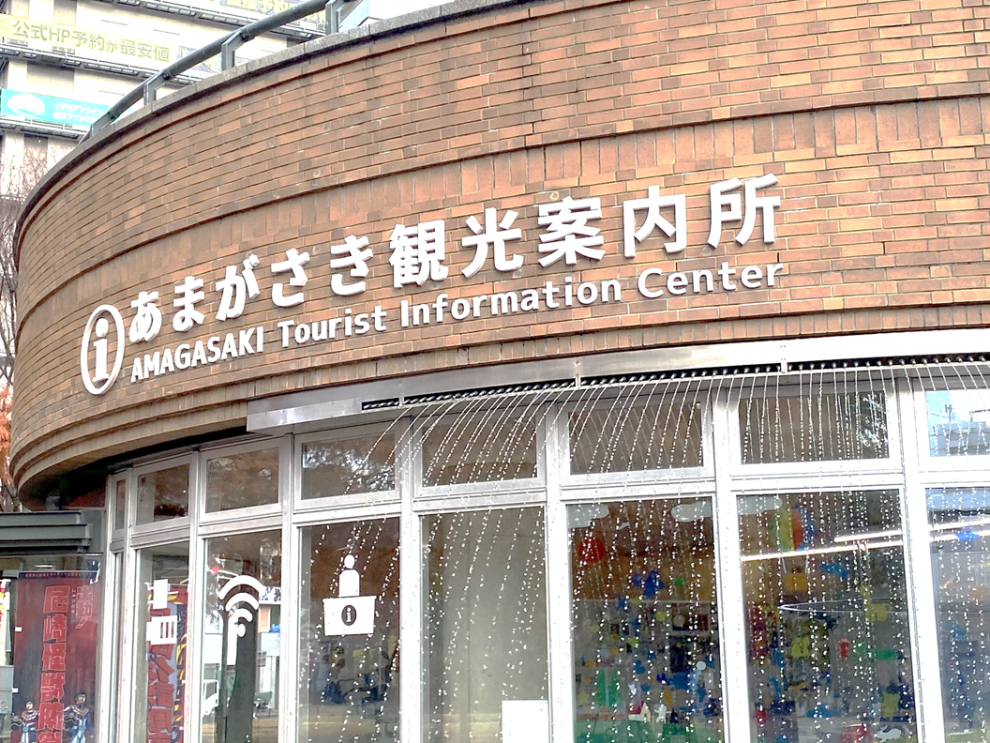
You can get a map of suggested sightseeing routes at the Amagasaki Tourist Information Center.
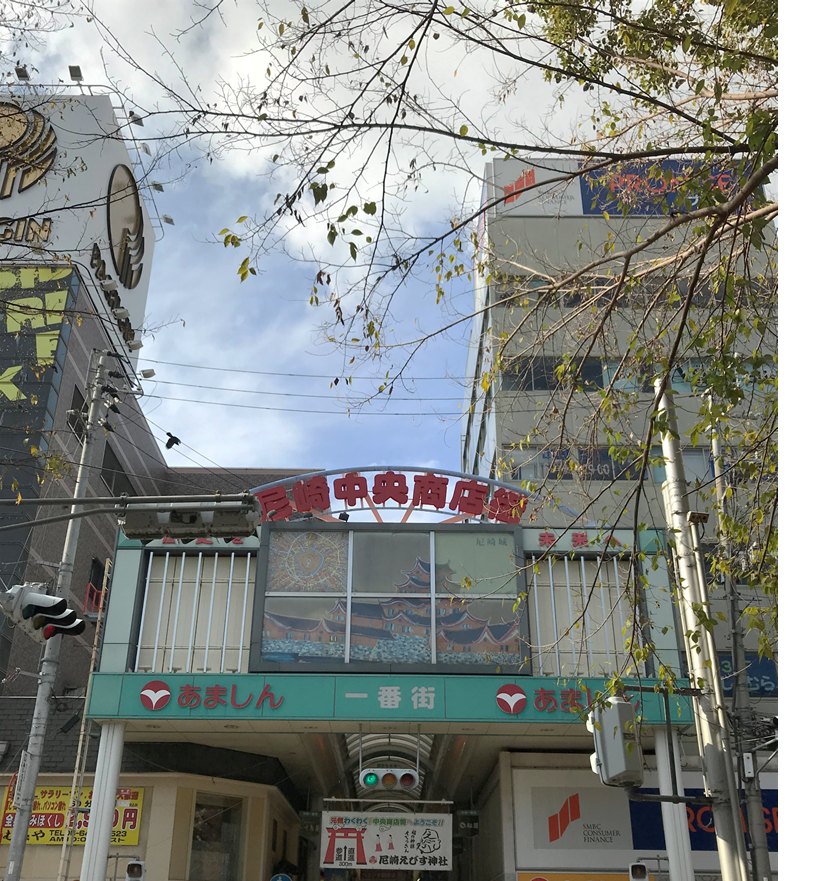
To Amagasaki Central Shopping Street
With a map of the Seven Lucky Gods pilgrimage in hand, let's set off!
Amagasaki Central Shopping Street has many long-established shops, so we'll enjoy strolling through it and stopping along the way. We're probably starting to get hungry, so let's grab something to eat first.
Lunch
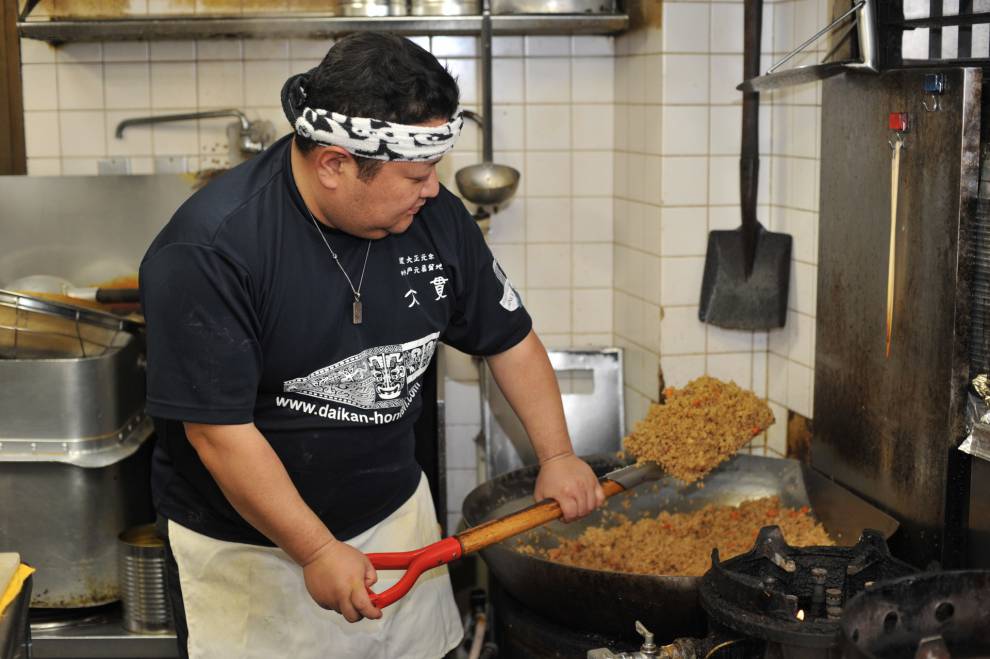
We'll have lunch at "Chuka Soba Daikan," a ramen shop founded in 1912 (Taisho 1).
"Onuki" Homepage
https://www.daikan-honten.com/
This is a long-established shop that has been in business for 107 years! It has a nostalgic atmosphere.
The owner is vigorously stir-frying rice in a large pot.
It's very appetizing!
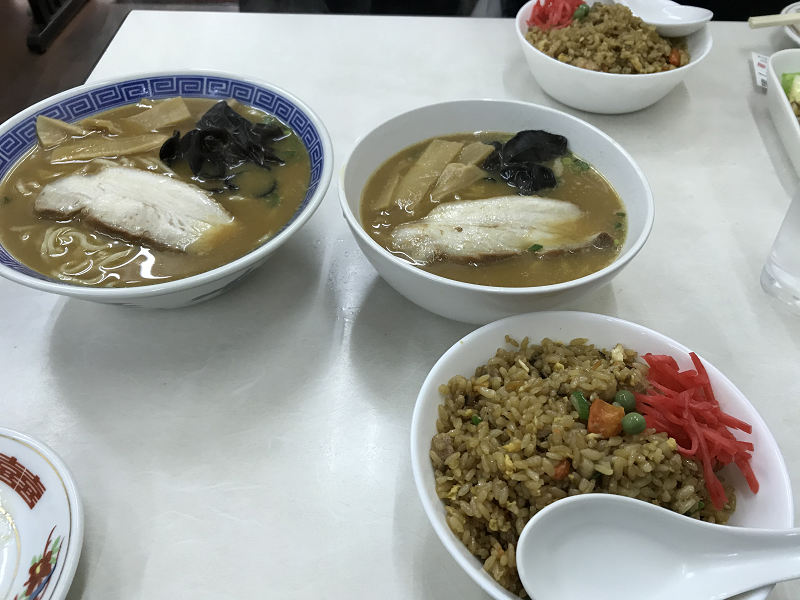
A set meal of homemade egg noodles (Chinese style) and fried rice.
You can choose from "half," "regular," and "large" portions of Chinese noodles, and "mini," "small," "medium," "large," and "extra large" portions of fried rice. Even the "half" portion of Chinese noodles and the "mini" portion of fried rice are very satisfying!
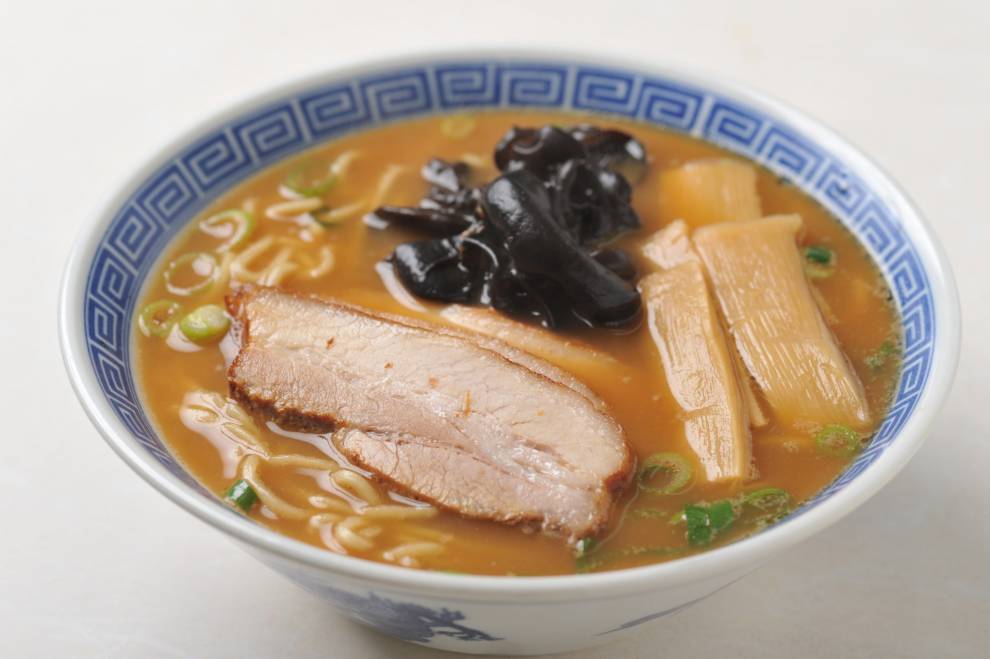
Chinese noodles (homemade egg noodles)
Enjoy the rich flavor of our aged soy sauce-based broth, which has been continuously replenished since our founding in 1912, along with our glossy, homemade, hand-kneaded egg noodles.
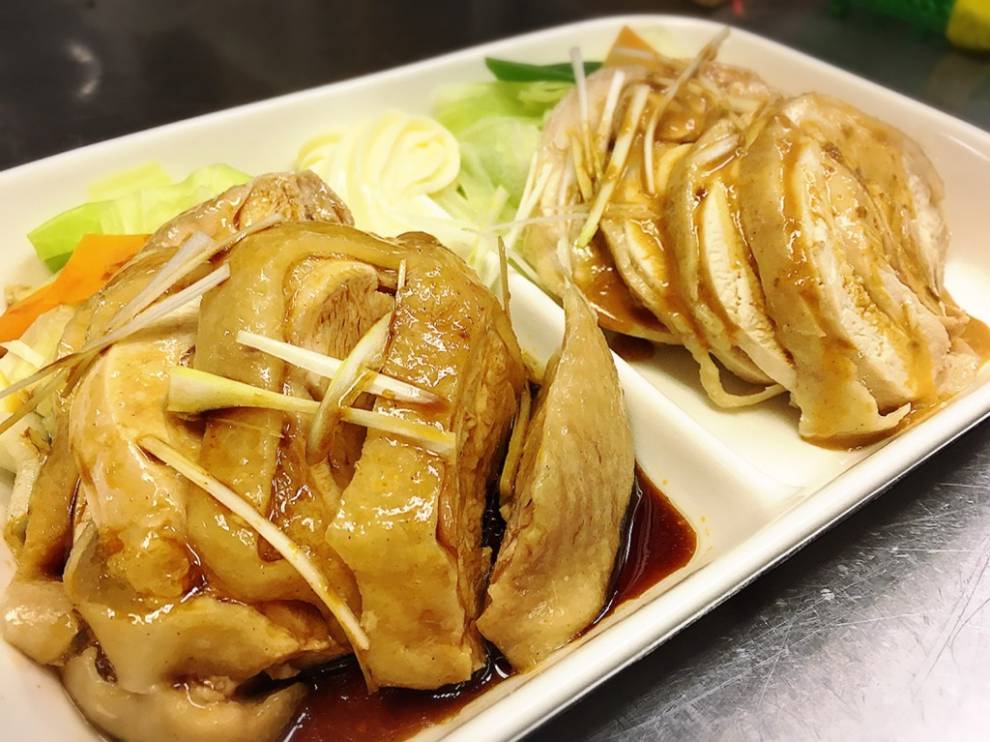
Our most popular side dish! We also ordered steamed chicken.
You can enjoy Tajima chicken thighs prepared in two ways at the same time: with aged soy sauce and bang bang chicken sauce.
This steamed chicken is by far the most popular side dish! The moist steamed chicken is coated in delicious sauce! You can enjoy both with a half-and-half portion, or try it with just the aged soy sauce or bang bang chicken sauce!
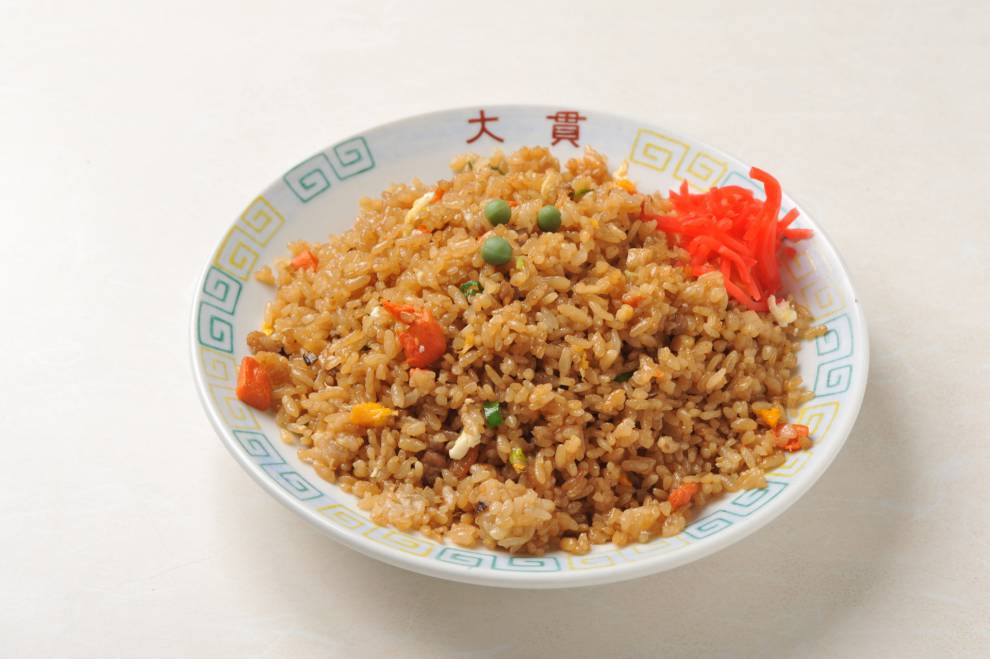
A well-seasoned fried rice dish.
The fried rice is made with 100% Omi rice.
The seasoning is strong and on the richer side.
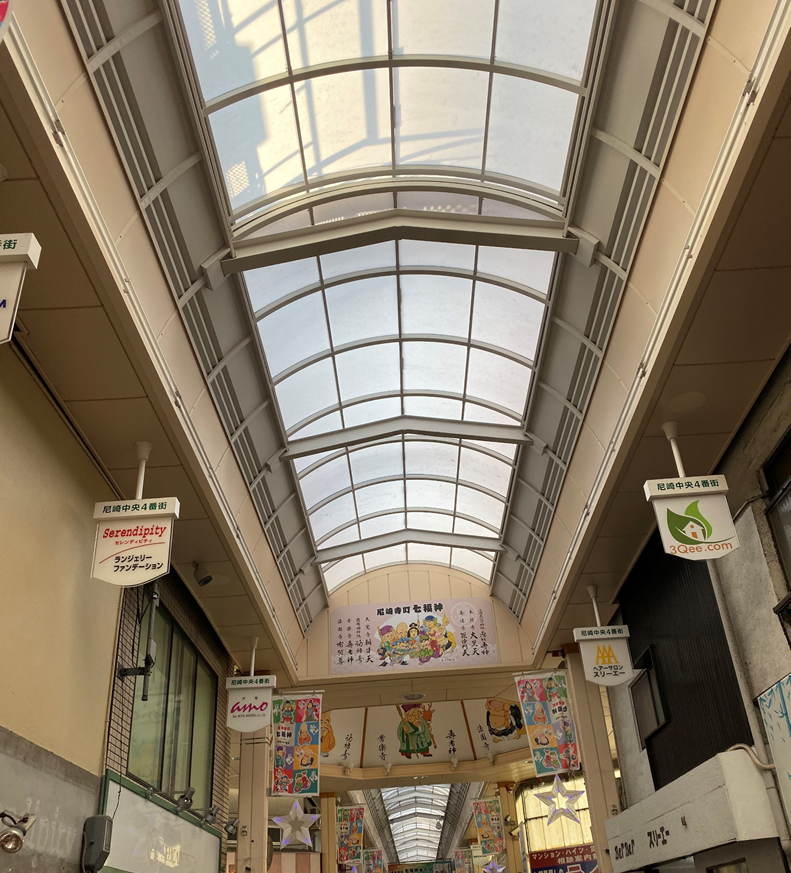
Our destination is "Amagasaki Ebisu Shrine".
After filling our stomachs, we headed to Amagasaki Ebisu Shrine to buy a Seven Lucky Gods shikishi (decorative paper board) for 500 yen. We found the Seven Lucky Gods Arcade!
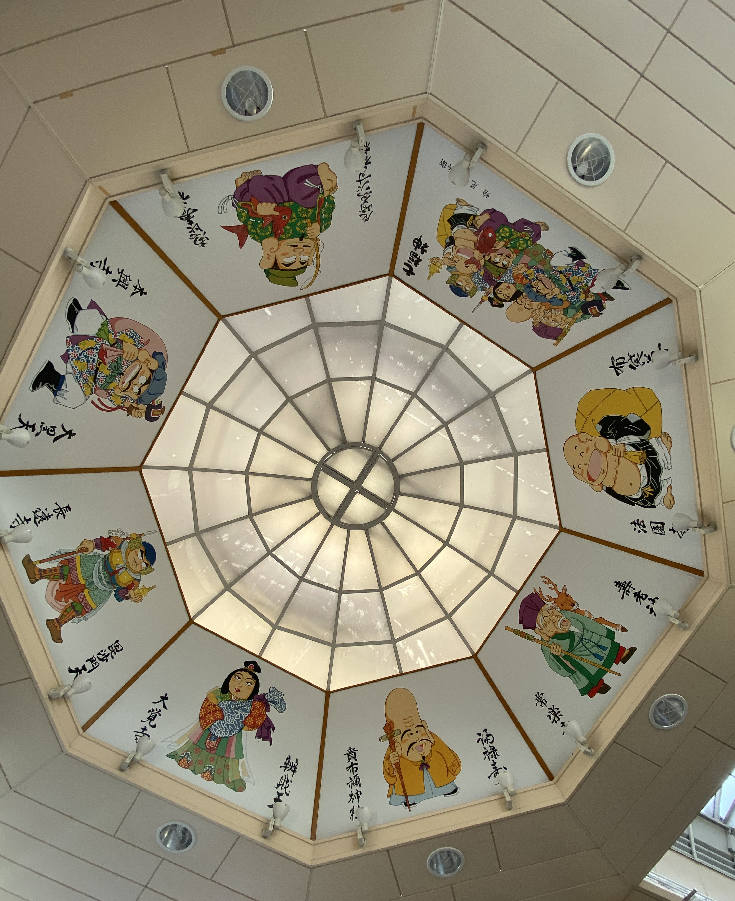
I found an arcade featuring the Seven Lucky Gods!
Looking up at the "Seven Lucky Gods Dome" in the shopping arcade, we set off on our pilgrimage to the Seven Lucky Gods.
These Seven Lucky Gods are illustrations by local manga artist Sohei Amako, who is famous as the creator of "Nintama Rantaro."
It's difficult to get a good shot of the entire dome!
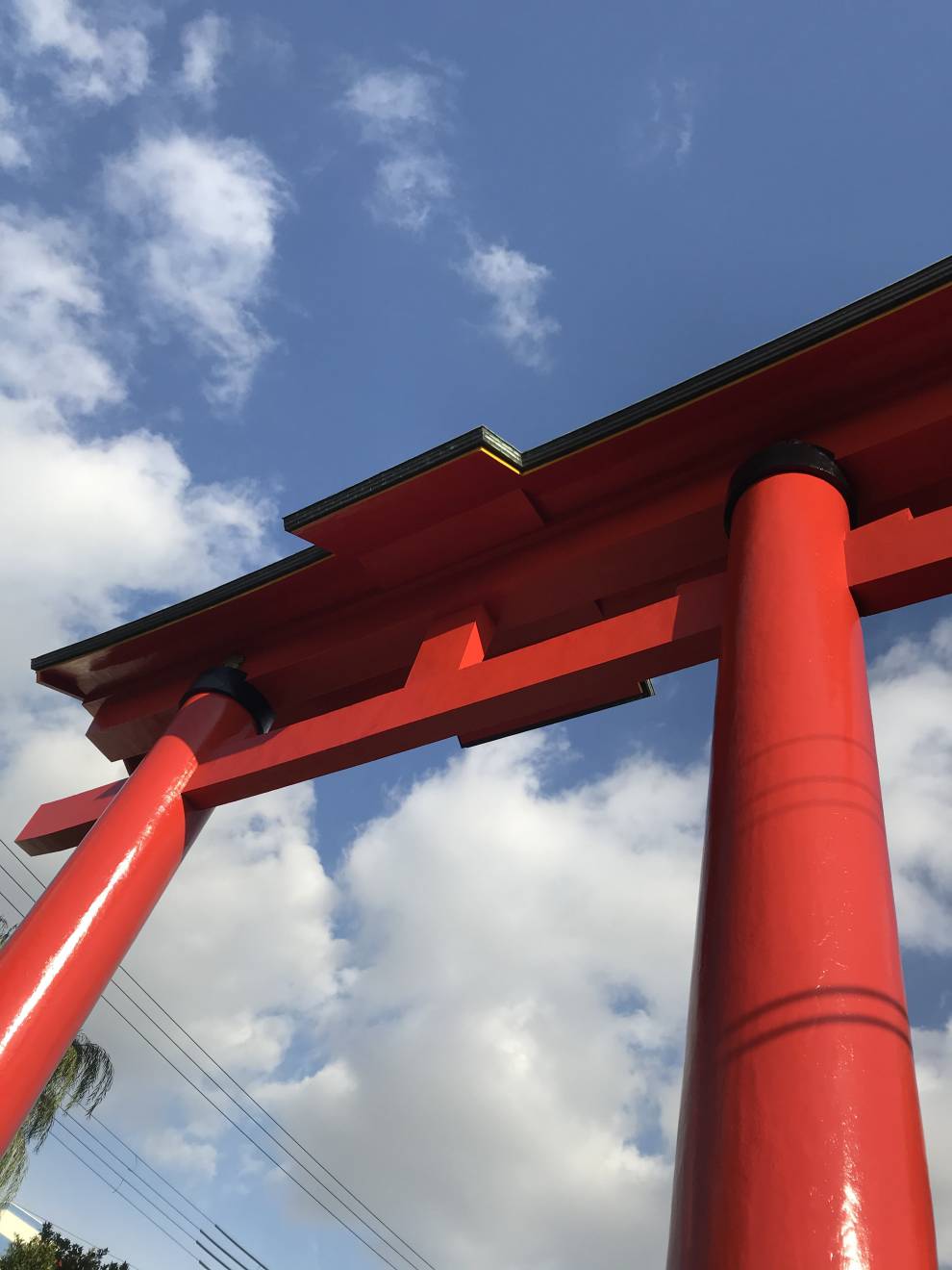
Amagasaki Ebisu Shrine
Amagasaki Ebisu Shrine, with its striking large torii gate.
This is the only torii gate this large on the Seven Lucky Gods pilgrimage route.
Great for photos too!
Amagasaki Ebisu Shrine
https://www.amaebisu.com/
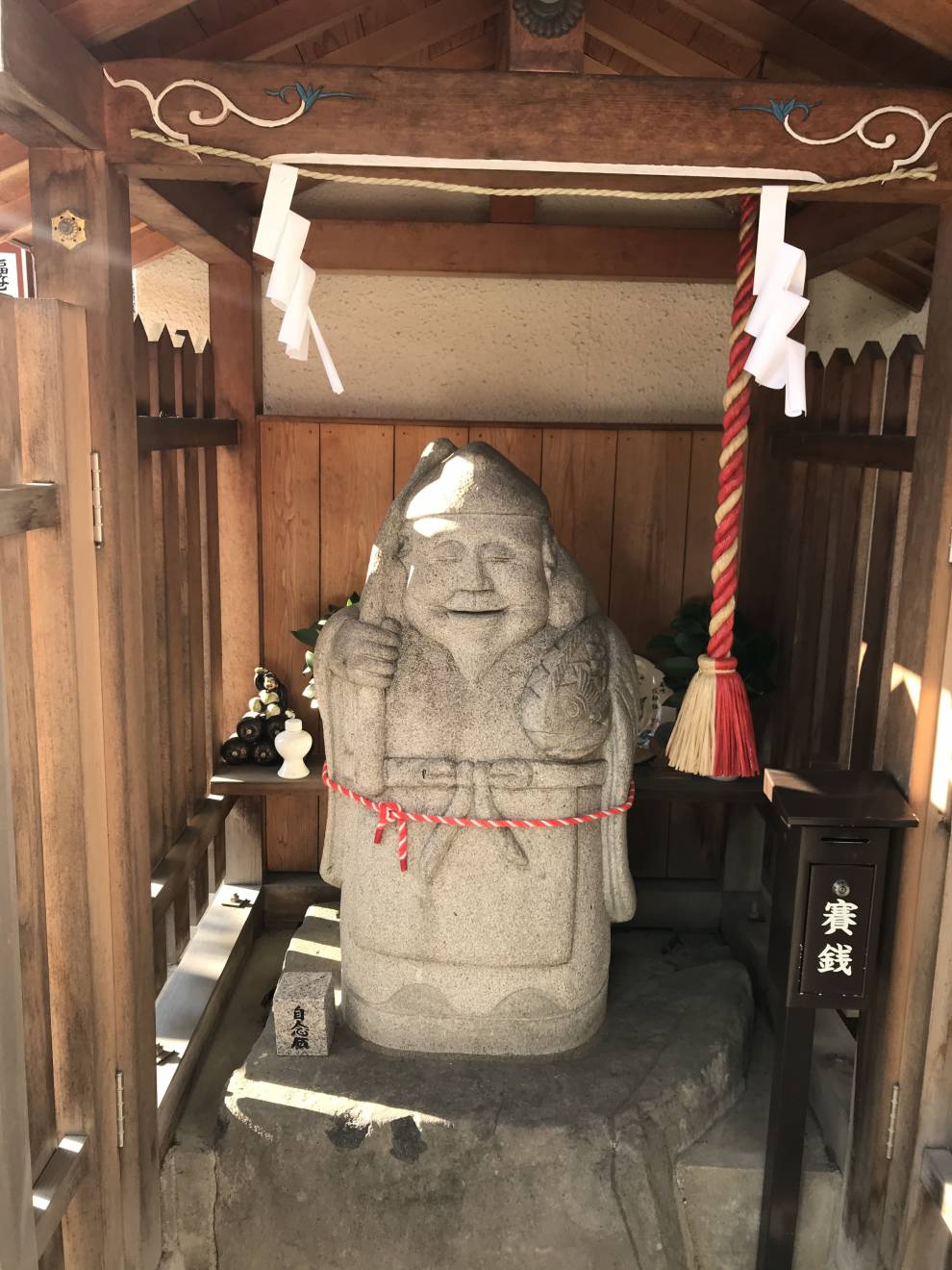
It is said that Amagasaki Ebisu Shrine was founded before the reign of Emperor Daigo. Since ancient times, Ebisu has been worshipped by fishermen as the god of the sea and the protector of fishing and navigation. In Amagasaki, a city of the sea, he is celebrated under the affectionate name "Ebessan," and it is said that the livelihoods of the fishermen prospered due to the profound divine blessings they received.
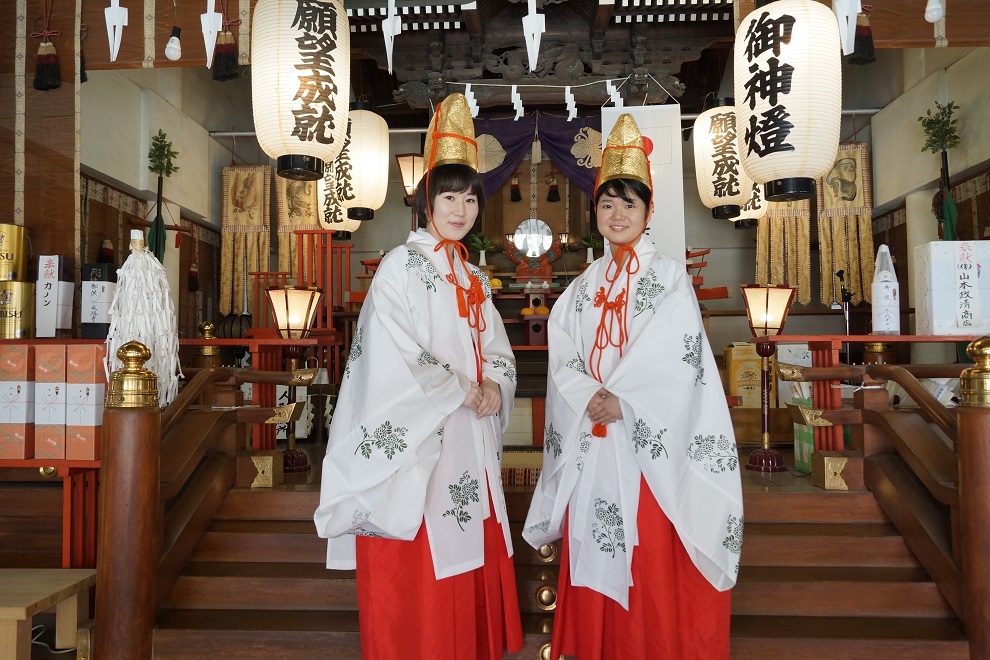
Amagasaki Ebisu Shrine also offers a "Shrine Maiden Experience" (reservations required).
Our hotel staff have also experienced it!
・Click here for the experience report
・Click here for a shrine maiden experience
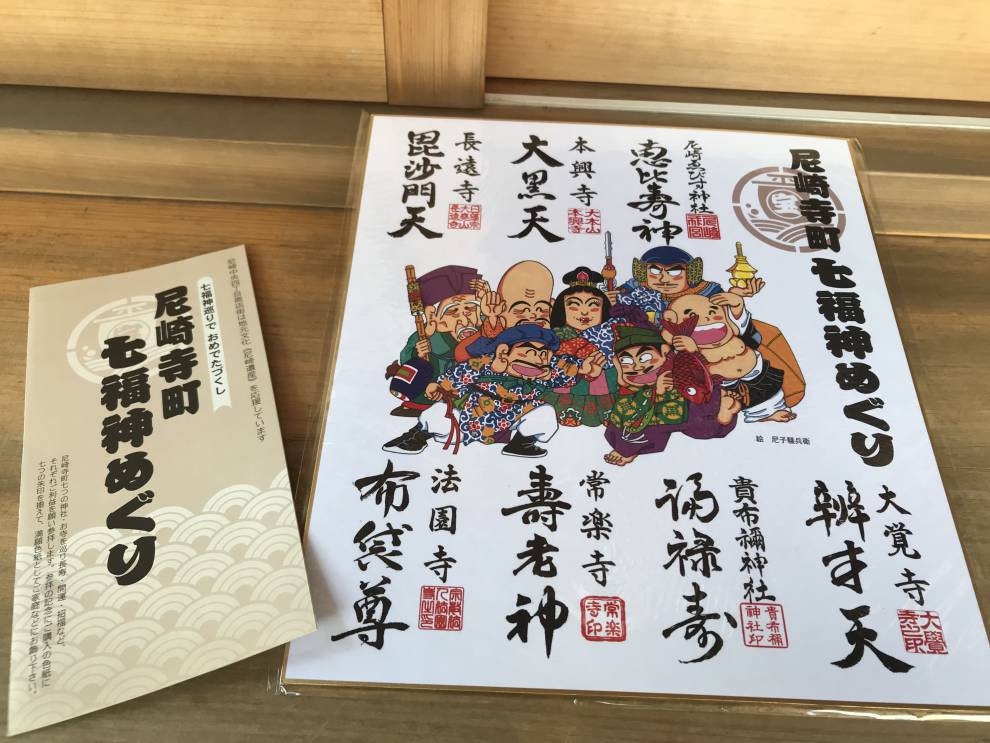
I will purchase a Shichifukujin (Seven Lucky Gods) shikishi (decorative paper board) for 5
The shikishi (decorative paper board) also features an illustration by Amako Soubei.
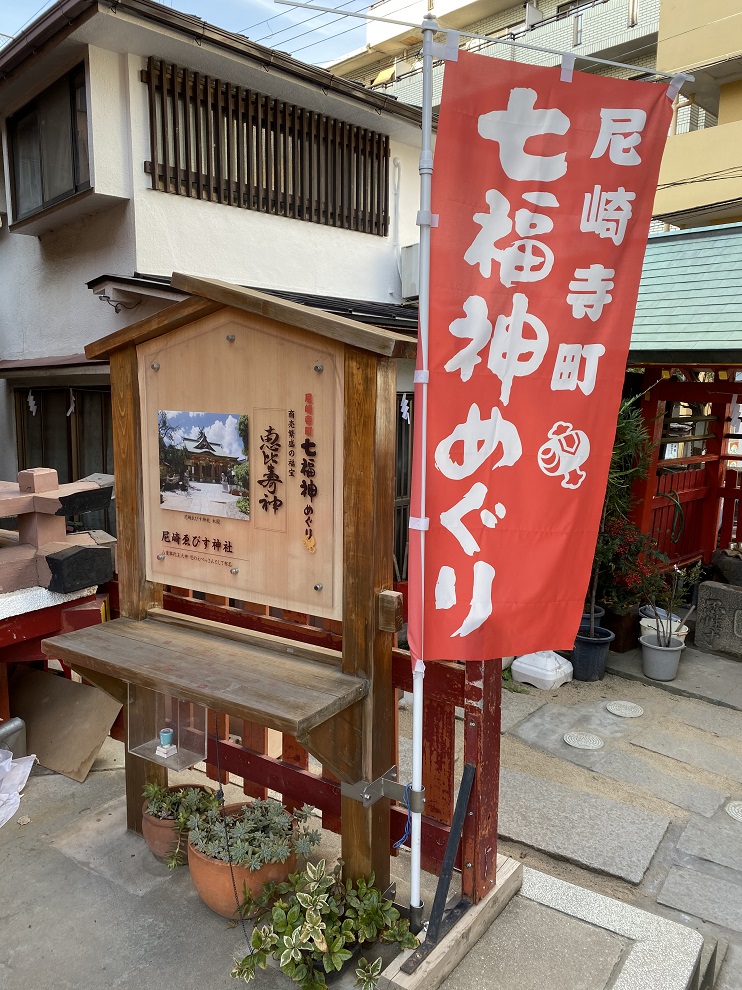
I'll stamp the first commemorative stamp onto the colored paper.
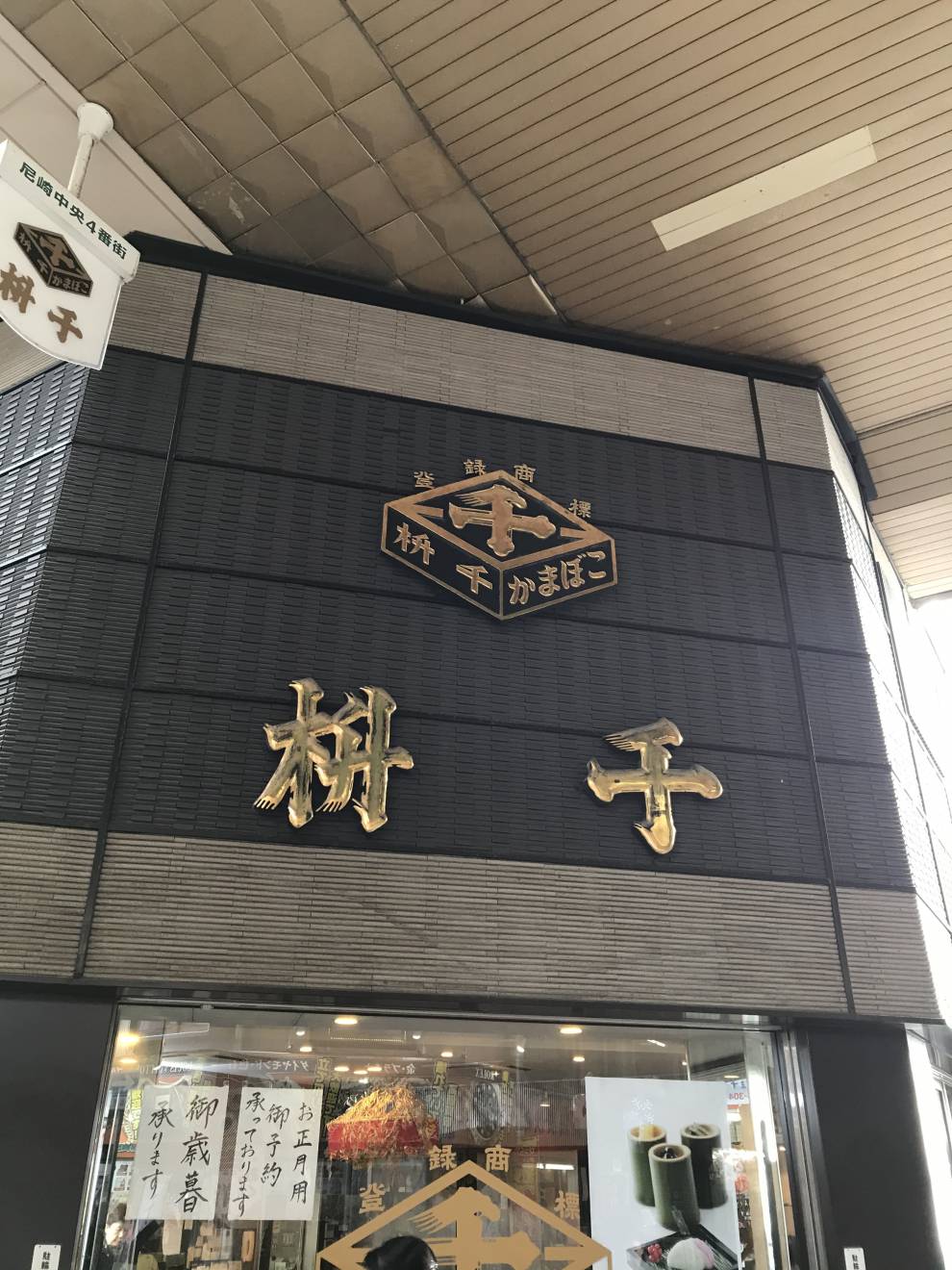
Back to the shopping street
We head back to the shopping street to reach the next shrine. We buy some "Amagasaki Masusen kamaboko," a local favorite.
・Click here for the official website of Amagasaki Masusen
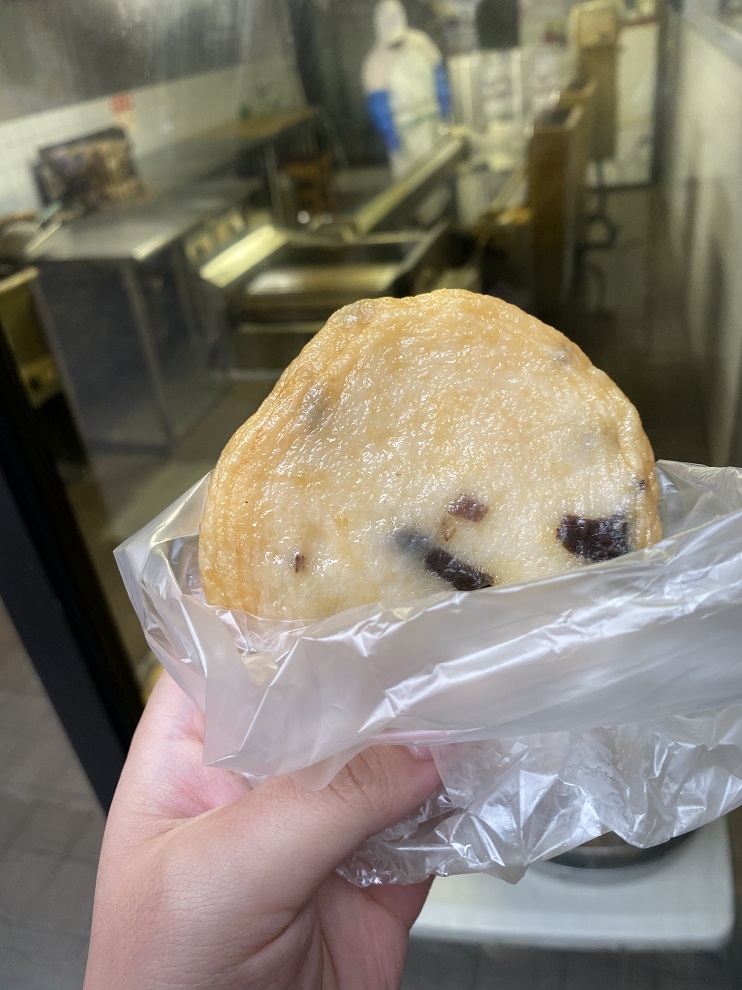
Since its founding in the late Edo period during the Ansei era, this shop has offered handcrafted kamaboko (fish cakes) and fried foods made with meticulous care and attention to detail. No additives are used, so even small children can enjoy them with peace of mind.
Since you can buy them one at a time, I'll eat them as I head to the next shrine.
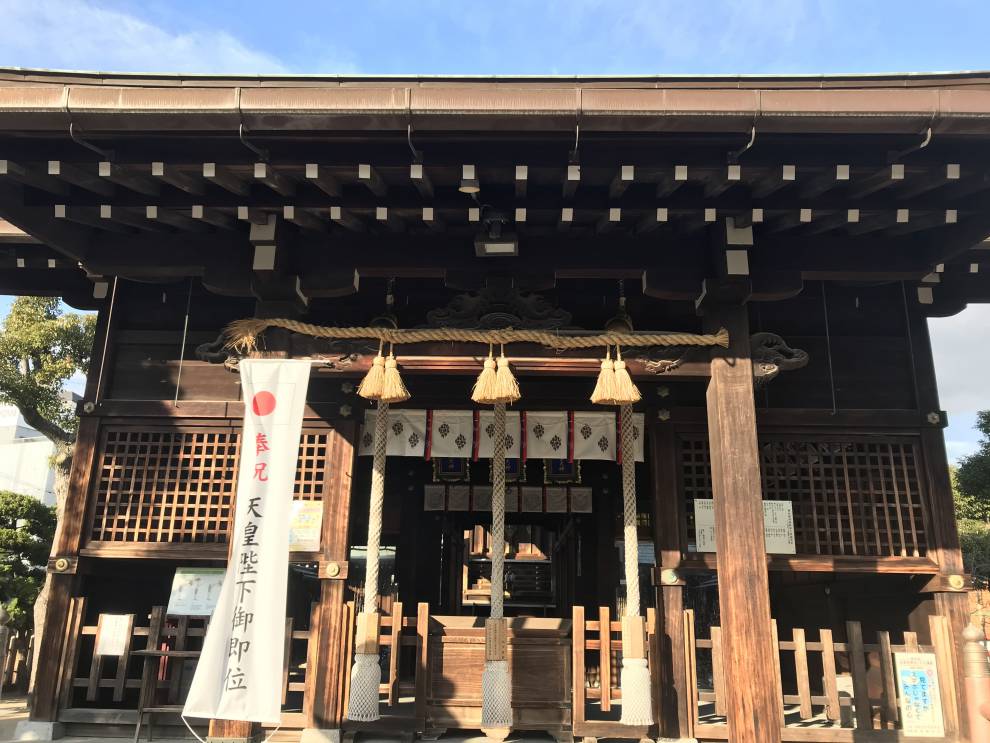
To Kibune Shrine
We are resuming the Seven Lucky Gods stamp rally. The second stamp will be at Kibune Shrine, affectionately known as "Ama no Kifune-san".
Because it was once deeply revered by the lords of Amagasaki Castle and served as a place of prayer for generations, it is still affectionately known to many citizens as the "guardian shrine of Amagasaki."
http://kifunesan.jp/
There are also sheds for festival floats and theaters.
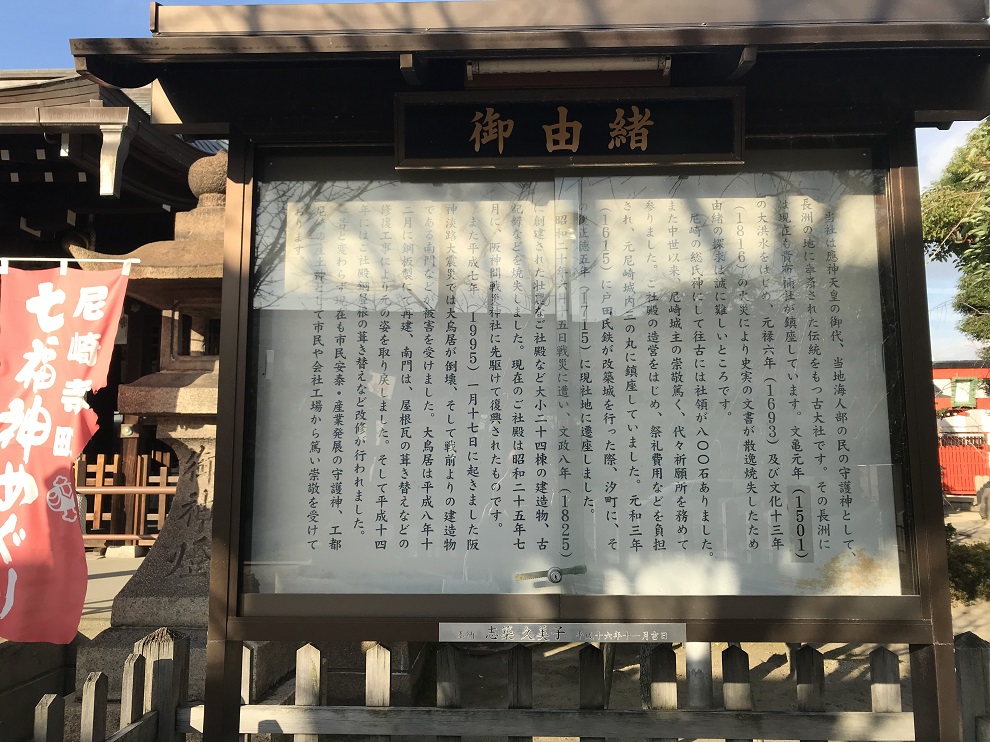
A connection to Kyoto through water
The deity enshrined here is Takaokami-no-Kami, the same deity as that enshrined at Kifune Shrine in Kyoto. This deity presides over rainfall and rain-stopping. Water is the source of life for all things, and this deity is the god of water sources, supplying the vital water that cannot be neglected for even a moment.
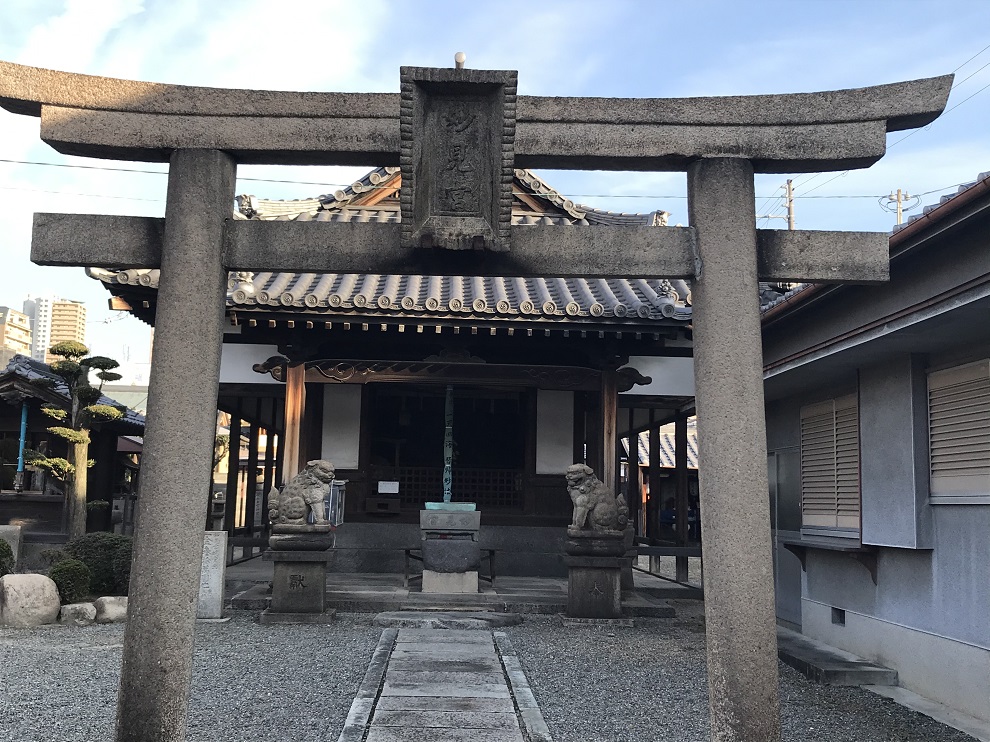
Chōenji Temple, which houses the main hall designated as an Important Cultural Property.
The Seven Lucky Gods pilgrimage continues. We're heading to Chōonji Temple for the third stamp.
According to the "Daigyōzan Engi" (History of Daigyōzan) of Chōonji Temple, it is said to have been founded in 1350 by Nichion Shōnin. It was moved from Ichiba Tatsumi (present-day Higashihonmachi) to its current location when Amagasaki Castle was built.
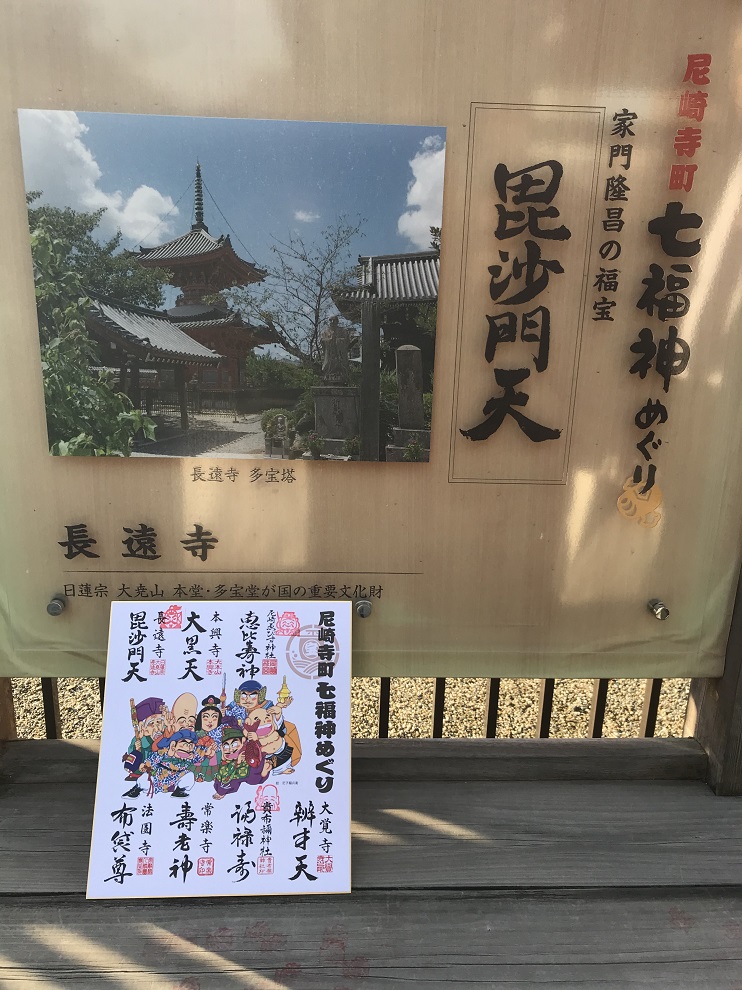
I received a stamp of Bishamonten (Vaisravana).
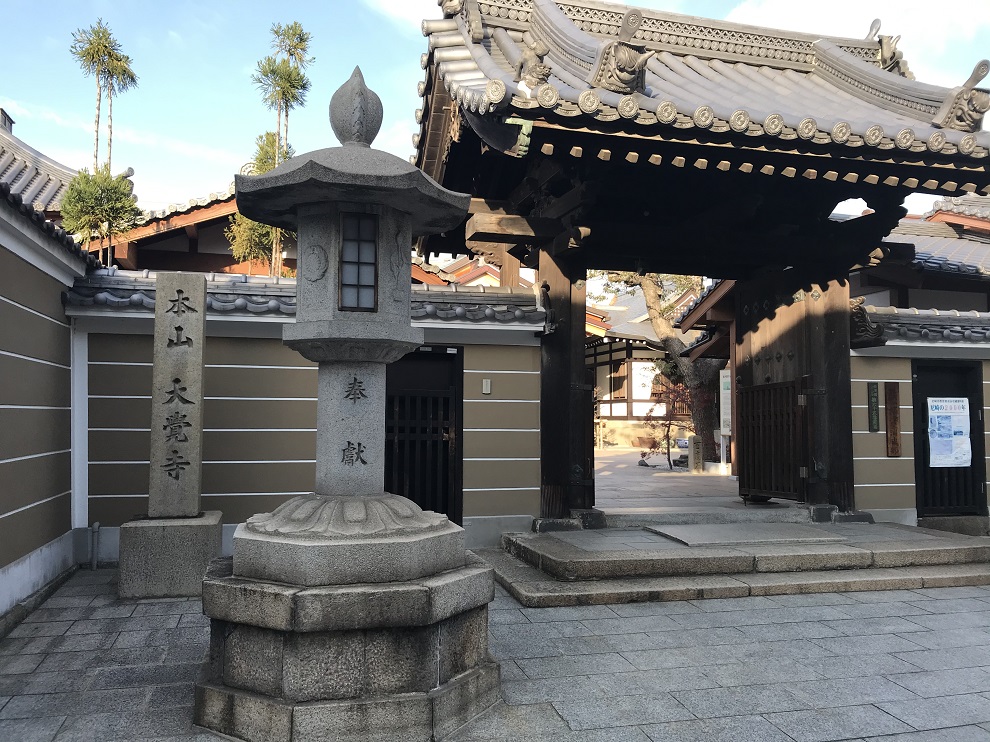
Daikaku-ji Temple, which also has a Noh stage.
It is the oldest existing temple in Amagasaki and belongs to the Ritsu sect of Buddhism. The main hall and other buildings were destroyed in a great fire in 1877 and were rebuilt.
Here, we'll get a stamp of Benzaiten.
https://amagasaki-daikakuji.com/enkaku
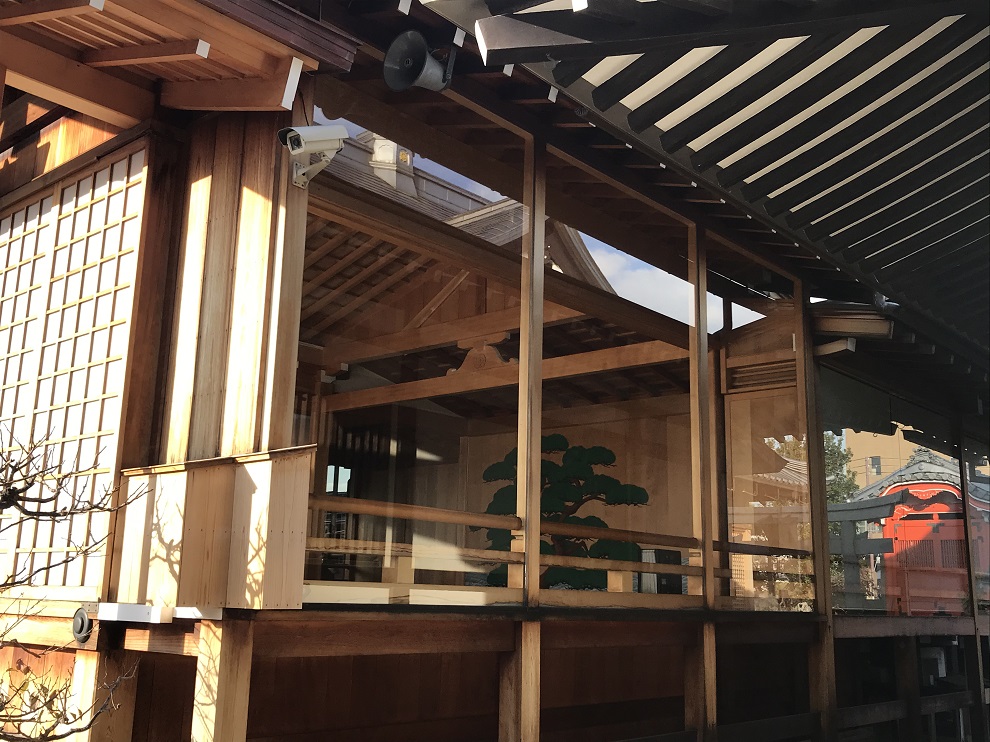
Every year on February 3rd, Setsubun, from 10 a.m. to 7 p.m., the "Daikakuji Temple Gesture Kyogen" performance and "Bean Throwing" ceremony are held.
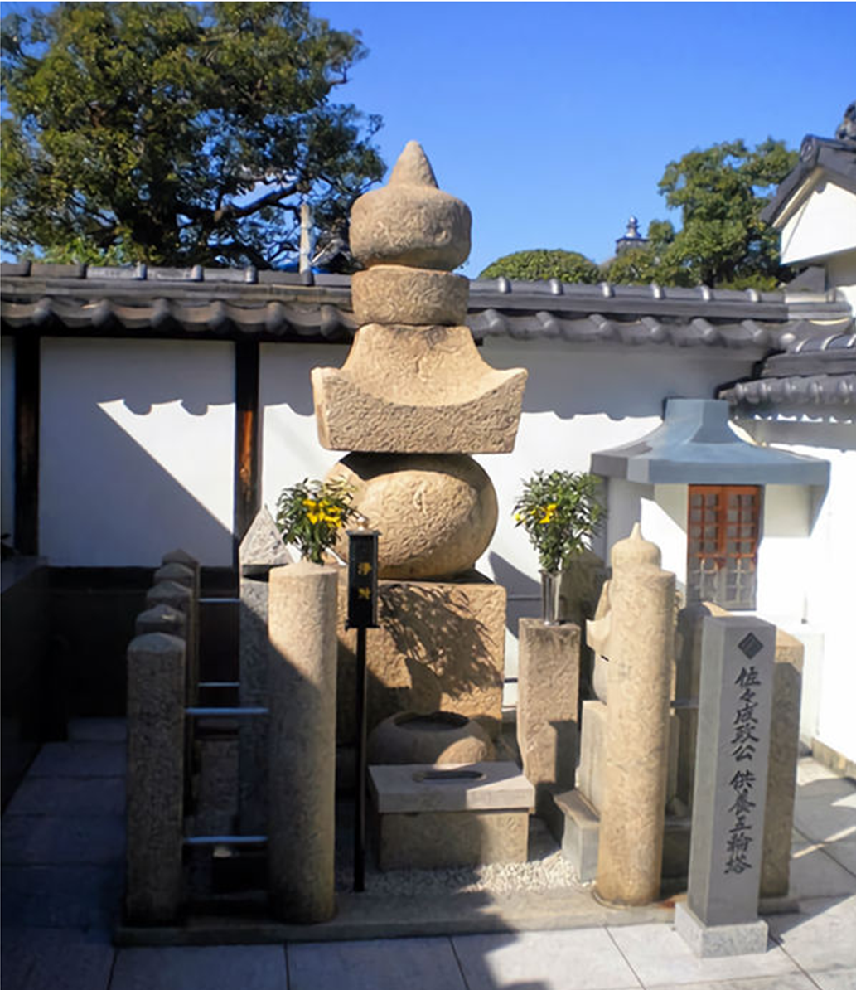
Hōenji Temple, where the tombstone of the Sengoku period warlord Sasa Narimasa stands.
There is a tombstone for Sasa Narimasa. While serving as the lord of Higo Province under Toyotomi Hideyoshi, Narimasa was forced to commit seppuku (ritual suicide) in Amagasaki in 1588 as punishment for a rebellion that broke out in his territory. The tombstone on the left after entering the temple gate is a replica; the original is kept inside the main hall.
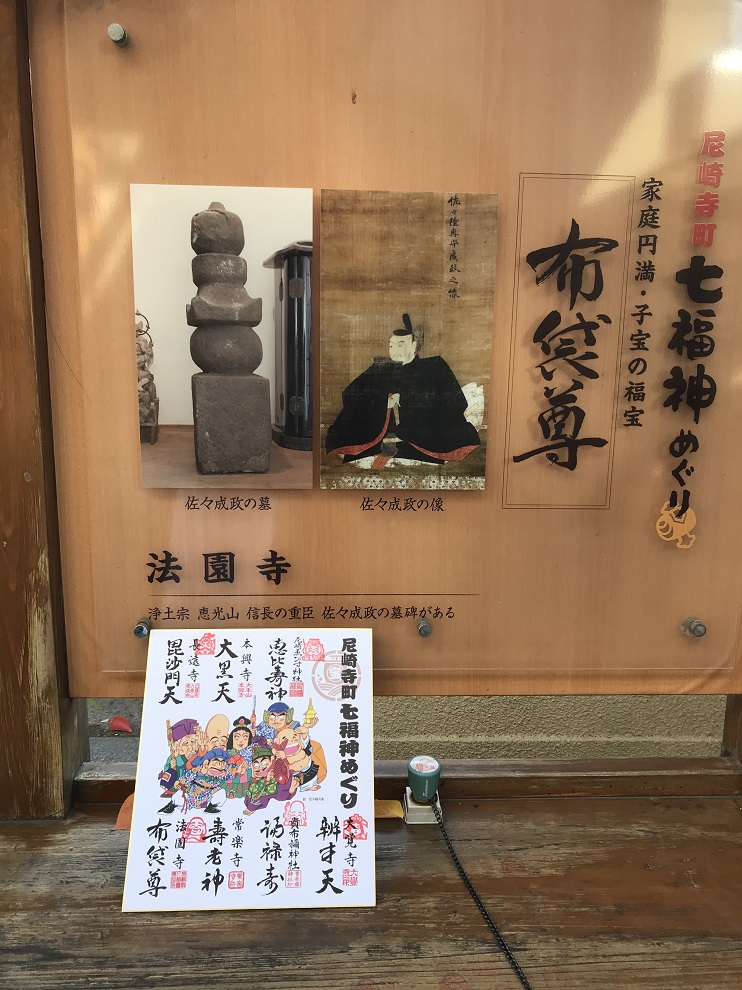
This is a picture of Hotei, one of the Seven Lucky Gods. He is the god of family harmony.
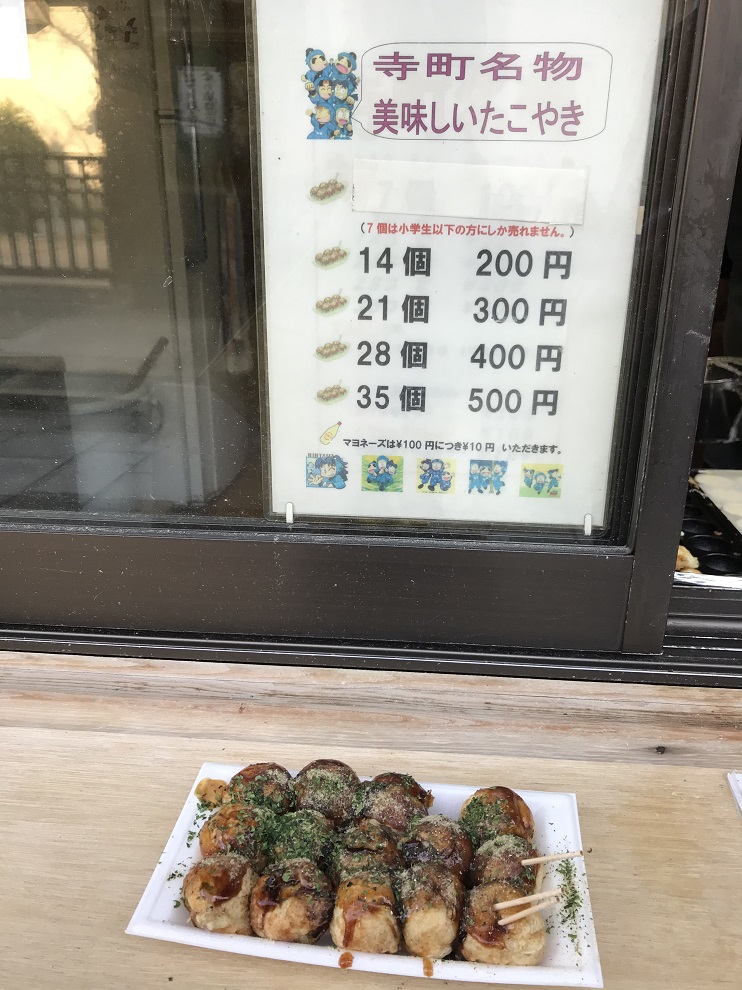
Teramachi's specialty: Delicious takoyaki
A takoyaki shop located on Teramachi Street.
14 pieces for 200 yen is very reasonable.
Nintama Rantaro is also depicted here.
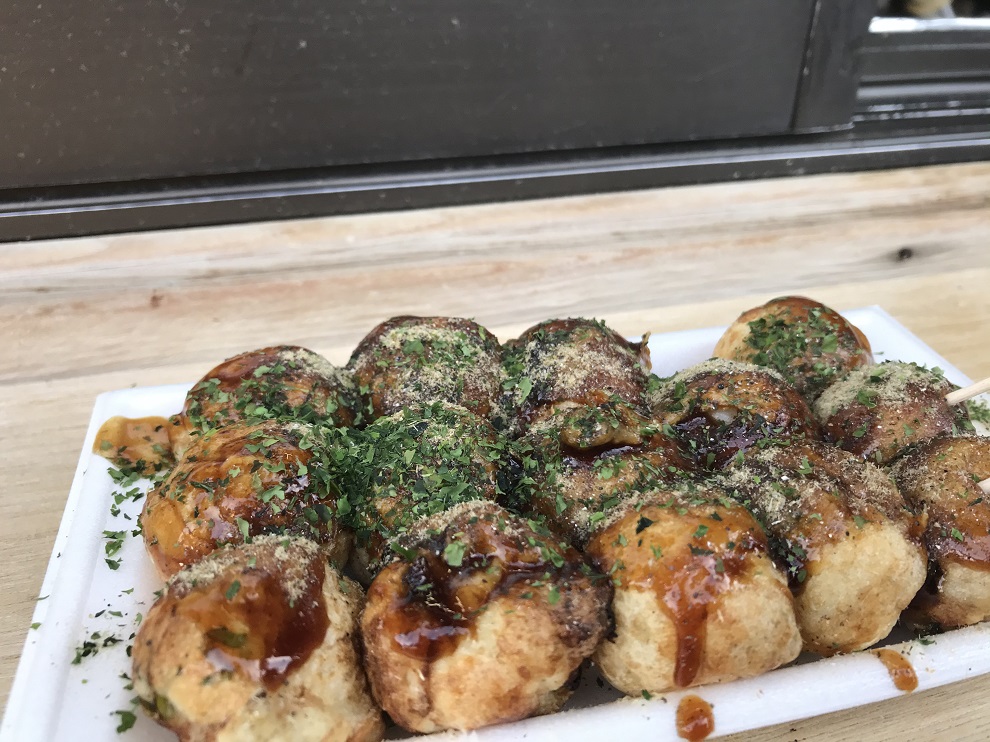
The old-fashioned sauce and mayonnaise bring back nostalgic memories, and it's delicious.
While enjoying some piping hot takoyaki, I headed to Jorakuji Temple, where the next stamp was located.
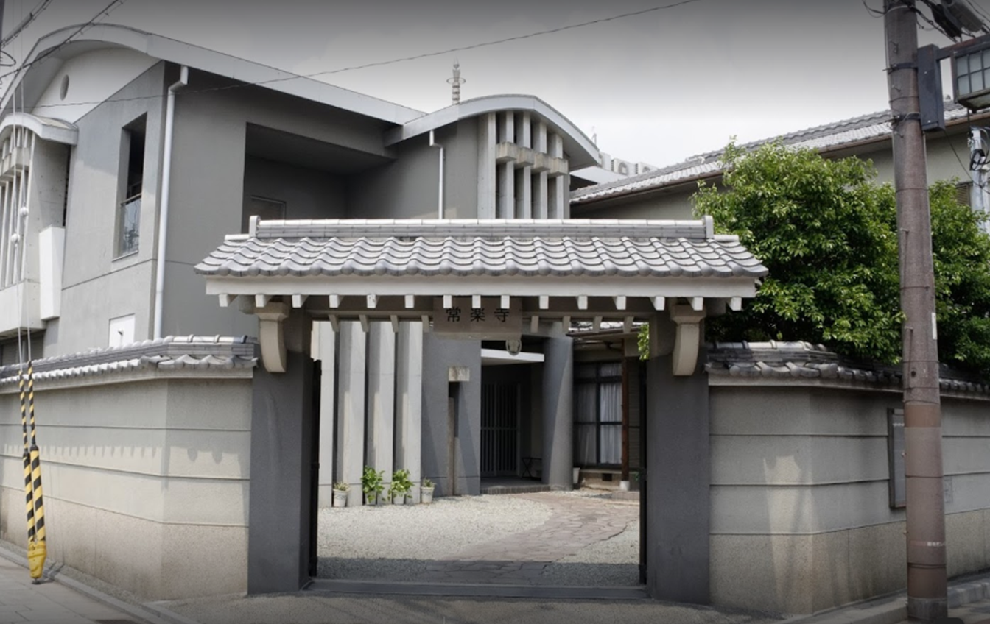
Joraku-ji Temple, standing in the temple district
According to the temple's records, Joraku-ji Temple was founded in 1504 by the monk Shinyo Joun. It was moved from its original location in Omotsu to its current site when Amagasaki Castle was built. In 1635, when Toda Ujitsune, the lord of Amagasaki Domain, was transferred to Ogaki in Mino Province, a branch temple was established in Ogaki, and it remains there today as Joraku-ji Temple.
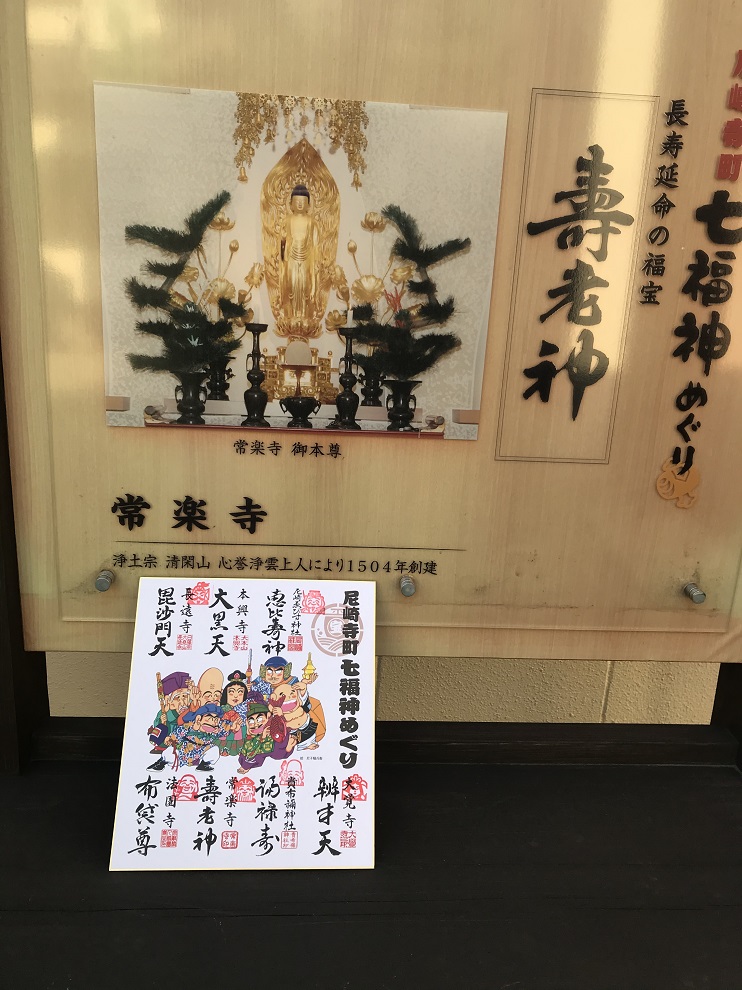
At Joraku-ji Temple, I received a stamp featuring Jurōjin, the god of longevity and good health.
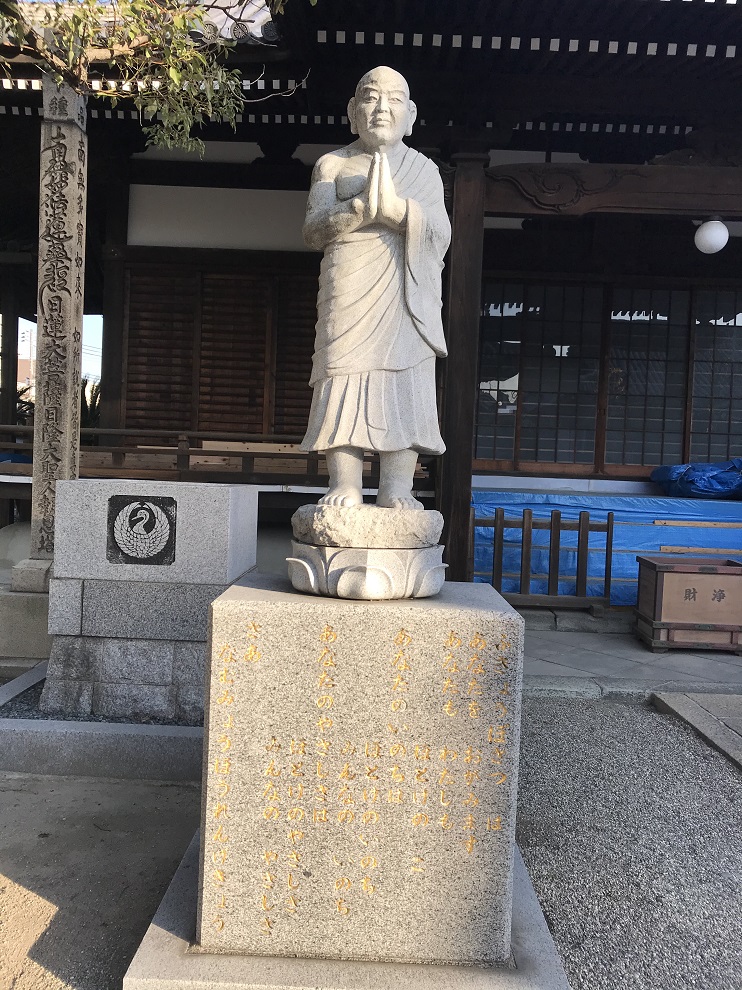
Honkoji Temple, one of the four main temples of the Honmon branch of the Nichiren sect.
I'm heading to Honkoji Temple to get my last stamp.
Honkoji Temple was founded in 1420 (Oei 27) with the patronage of Hosokawa Mitsumoto, the lord of Amagasaki Castle at the time. In 1617 (Genna 3), when the Toda clan, the local lords, built Amagasaki Castle, the temple was relocated to its current location as a replacement site, where it remains today.
http://www.hokkeshu.or.jp/honzan/honkoji.html
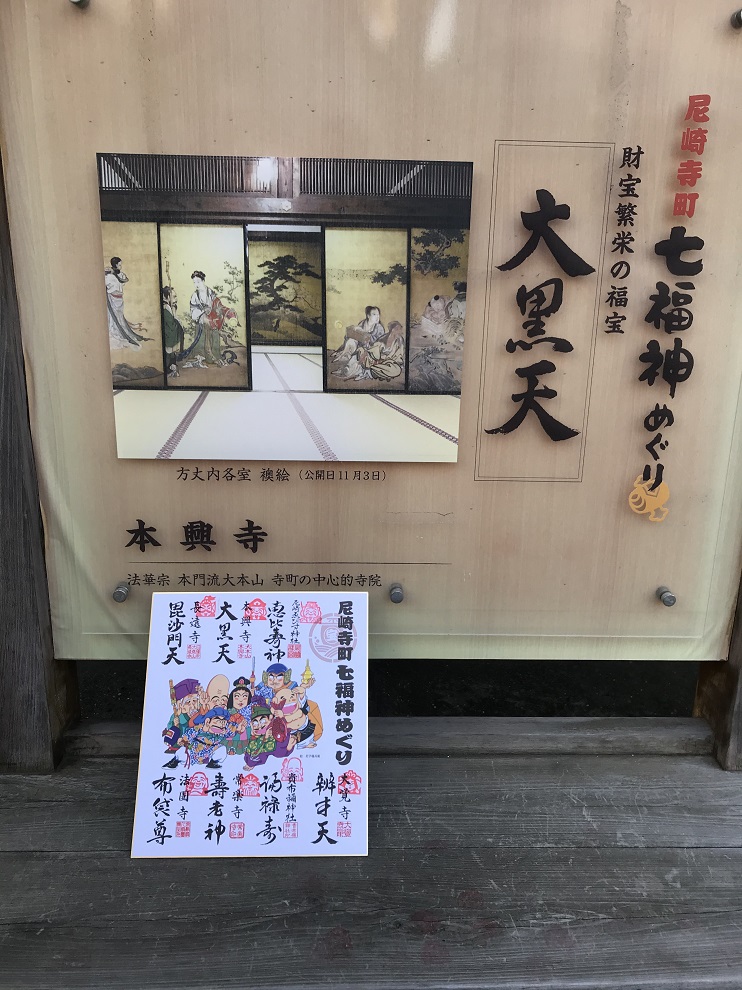
Here, I received a stamp featuring Daikokuten, the god of wealth and prosperity.
I've now collected all the Seven Lucky Gods stamps!
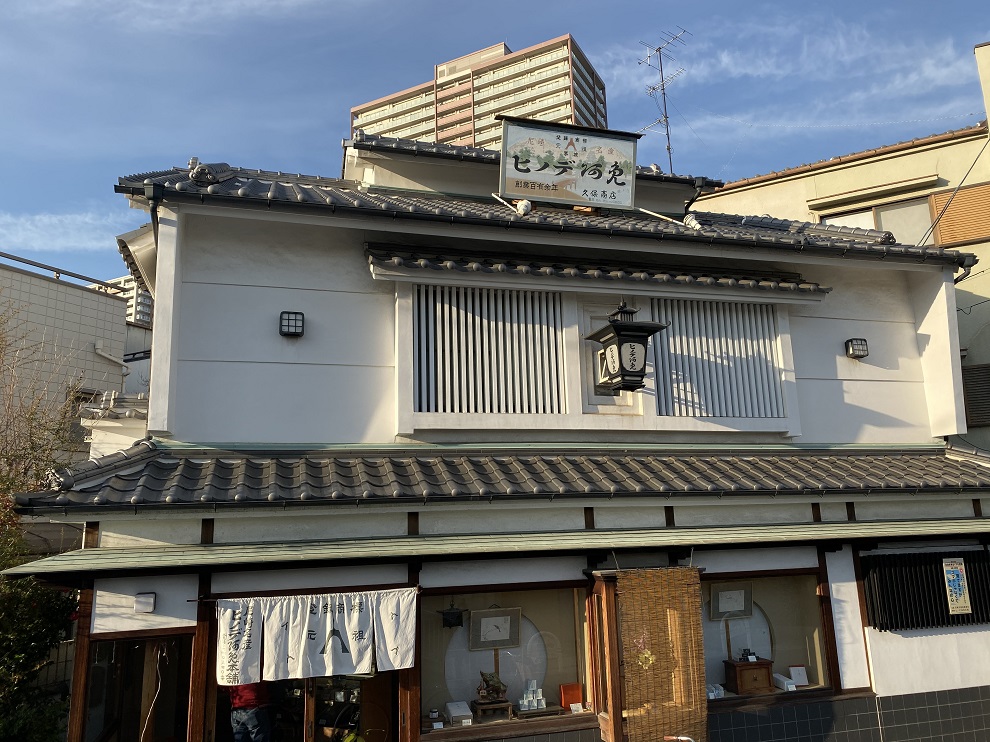
[Amagasaki's Specialty Products] Visit Hinode Ame Honpo
As we pass through Teramachi and head towards Amagasaki Castle, the final stop on our route, we make a visit to Hinode Ame, a famous Amagasaki specialty shop founded in the early Meiji era. The shop's logo is a "kotoji" (a tool that supports the strings of a koto), and the mark can be seen on the wooden shelves and noren (curtains) inside the shop. This is derived from the fact that Amagasaki Castle was called "Kinjo" (Koto Castle).
This starch syrup is the ultimate Japanese sweet, made without any added sugar. The moment you put it in your mouth, a natural sweetness and rich flavor spread throughout. The aftertaste is refreshing, and you can feel your throat becoming moist.
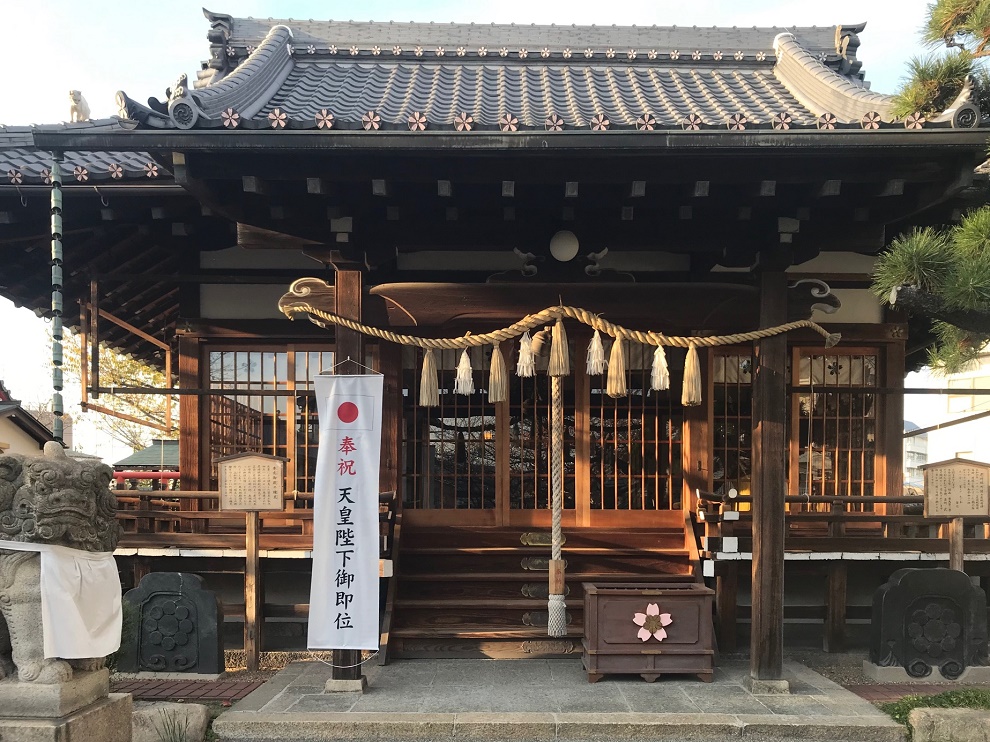
Sakurai Shrine
This shrine was originally built in 1882 (Meiji 15) within Amagasaki Castle to enshrine Lord Sakurai Matsudaira Nobusada and successive castle lords. It is a historical and venerable shrine that was rebuilt in its current location when National Route 43 was constructed.
The roof tiles are engraved with charming cherry blossoms.
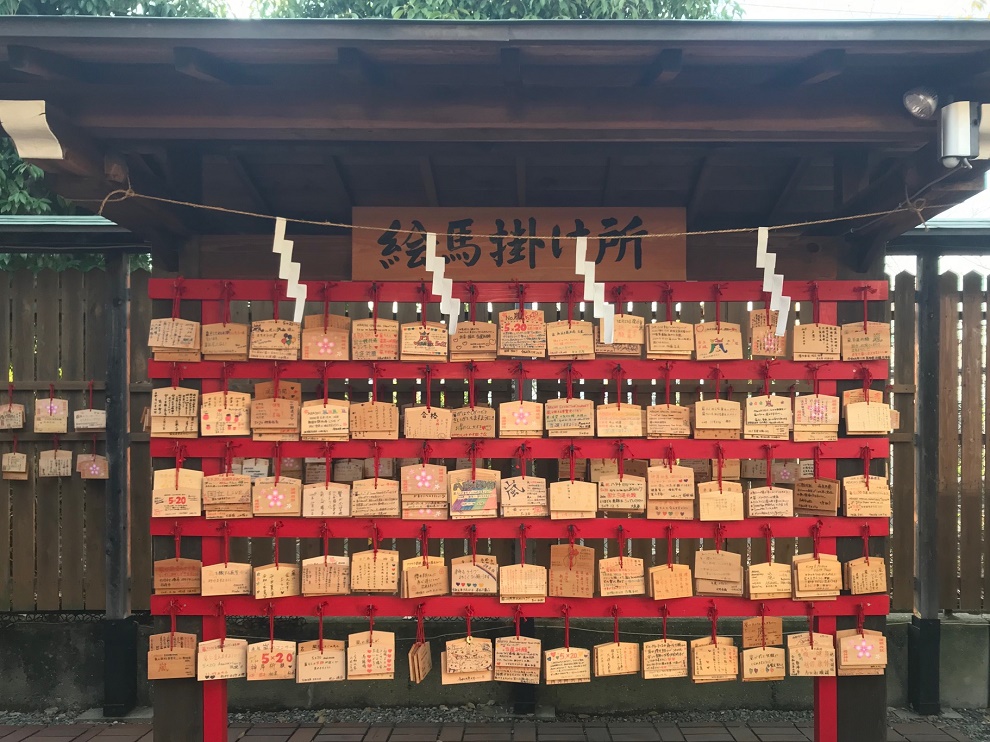
Ema hanging
Because the shrine is named "Sakurai," many fans of Sho Sakurai from the popular group Arashi come here. The ema (votive tablet) rack is filled with ema wishing to win tickets to Arashi concerts. Cherry blossoms are also depicted on the ema.
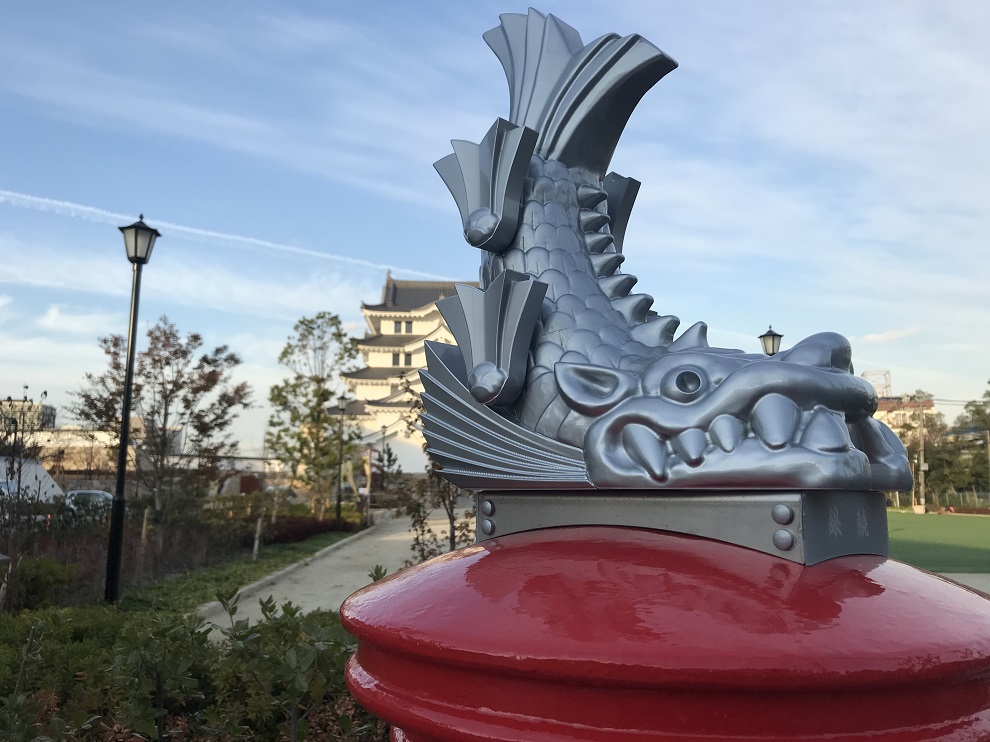
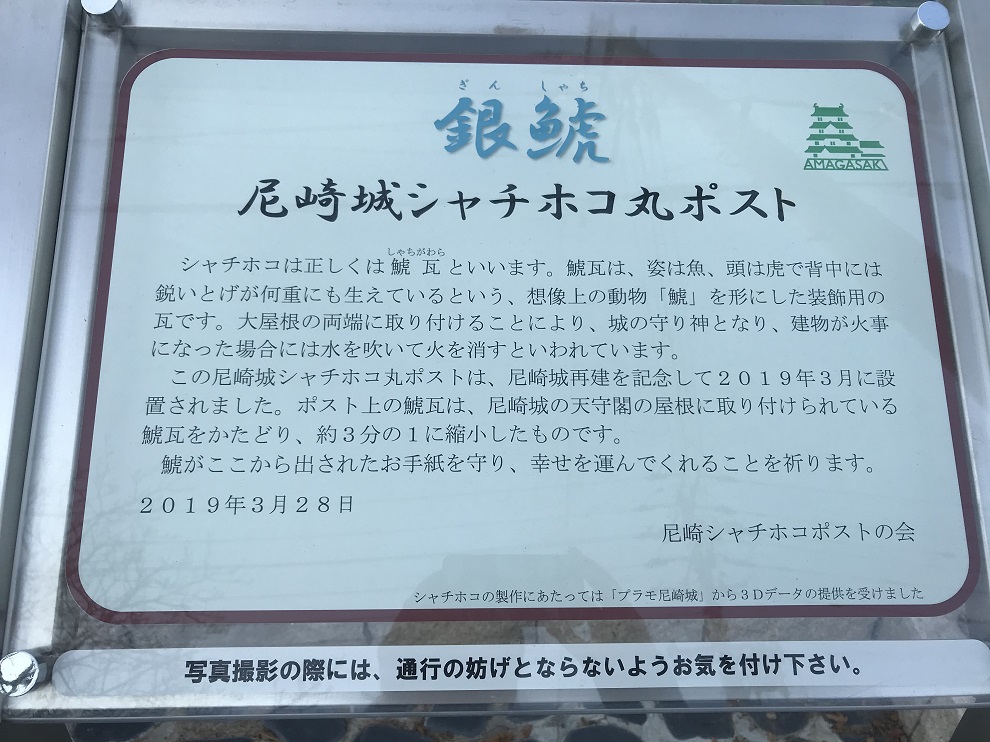
Amagasaki Castle Shachihoko Post
We're heading to Amagasaki Castle, which is across from Sakurai Shrine.
Along the way, I spotted a mailbox topped with a shachihoko (a mythical creature resembling a dolphin or a mythical creature). I took a picture of it with the castle in the background.
I managed to take some pretty good photos for social media. Cool!
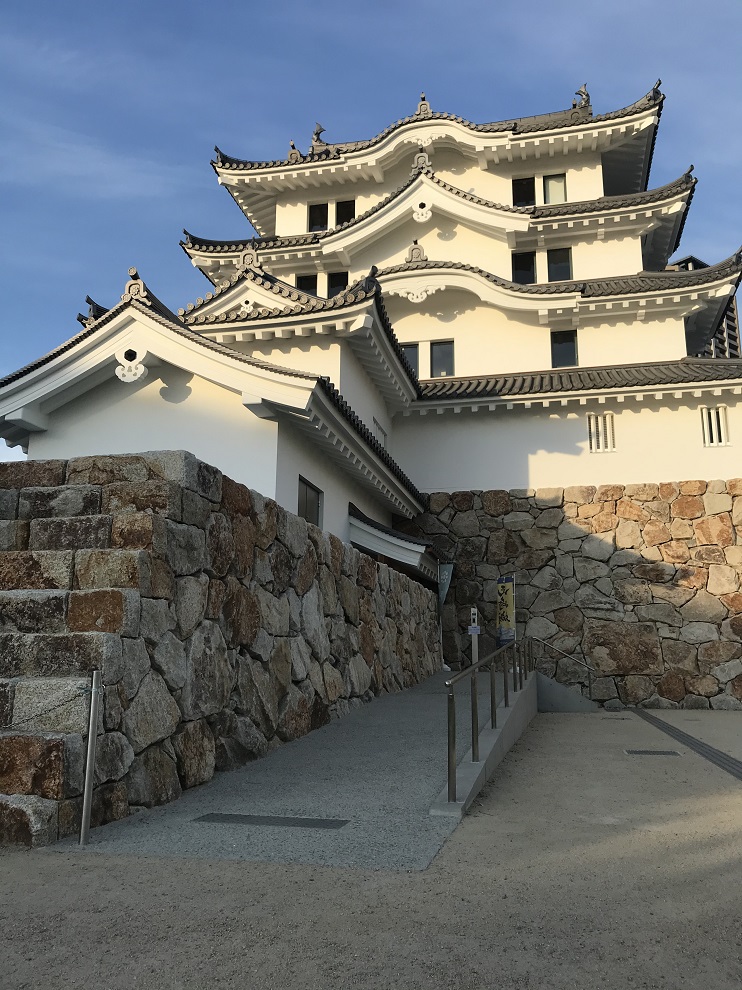
Finally, the last stop on the course: Amagasaki Castle
The Tokugawa family ordered the construction of Amagasaki Castle as a western defense for Osaka Castle, and it flourished as the largest castle town in the Hanshin area, with a population of nearly 20,000 at its peak. Amagasaki Castle was demolished after the Meiji Restoration, but thanks to the voices of citizens who love Amagasaki, it was completed on November 30, 2018, and opened to the public on March 29, 2019.
https://amagasaki-castle.jp/
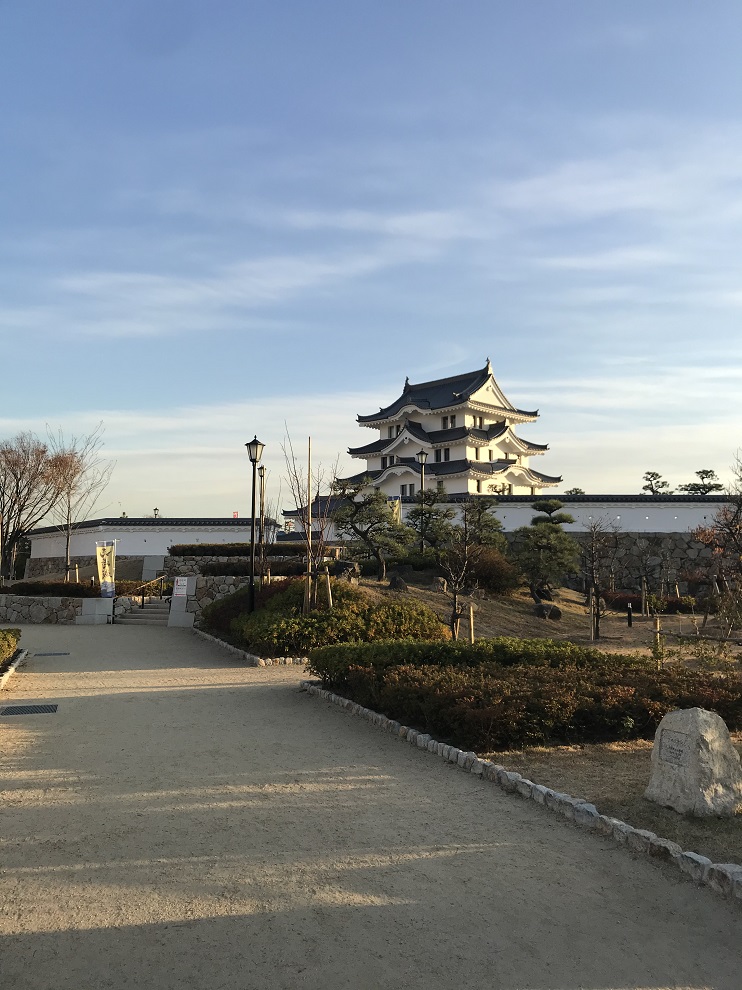
Amagasaki Castle offers plenty to enjoy.
Inside Amagasaki Castle, you can enjoy videos showcasing the charm of Amagasaki, including its history and aerial views, as well as a shop selling Amagasaki specialties. Entry to the first floor is free. The grounds also include a lawn area and a park, making it enjoyable for children as well.
To Hanshin Amagasaki Station
With Amagasaki Castle behind me, I head towards the bus rotary at Hanshin Amagasaki Station.
Take bus number 11 or 23 and get off at JR Amagasaki Station, where the hotel is located.
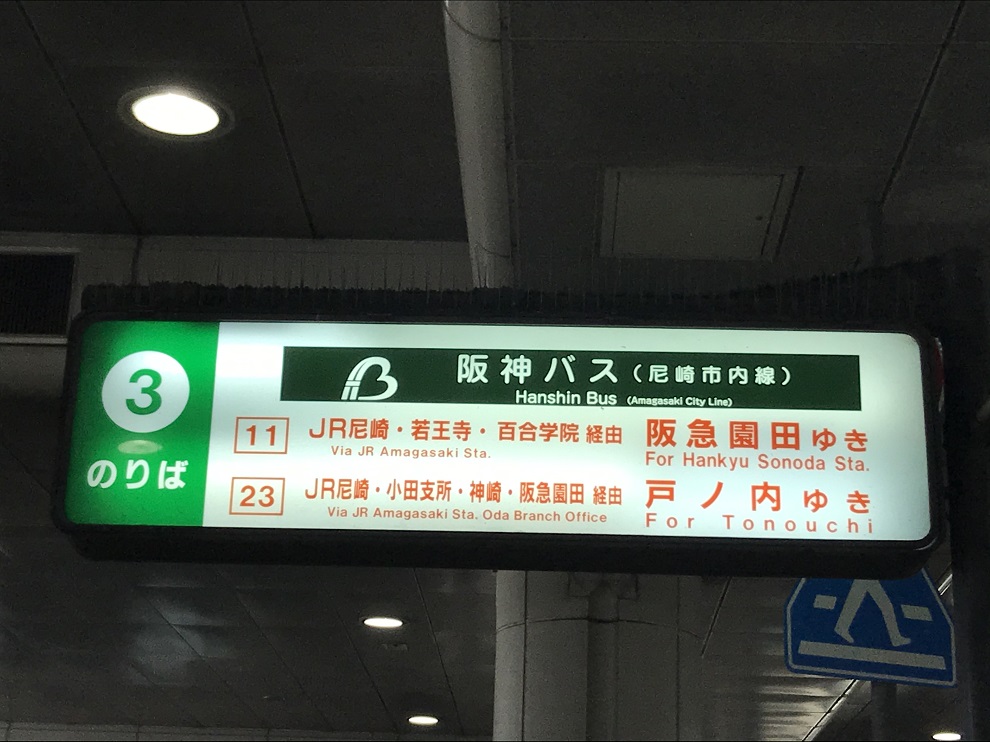
Get off at JR Amagasaki (South) station (approximately 10 minutes).
Arrived at the hotel
The Seven Lucky Gods pilgrimage and Amagasaki Castle course is a route that adults and children alike can enjoy.
Display your completed Seven Lucky Gods calligraphy to receive good fortune.
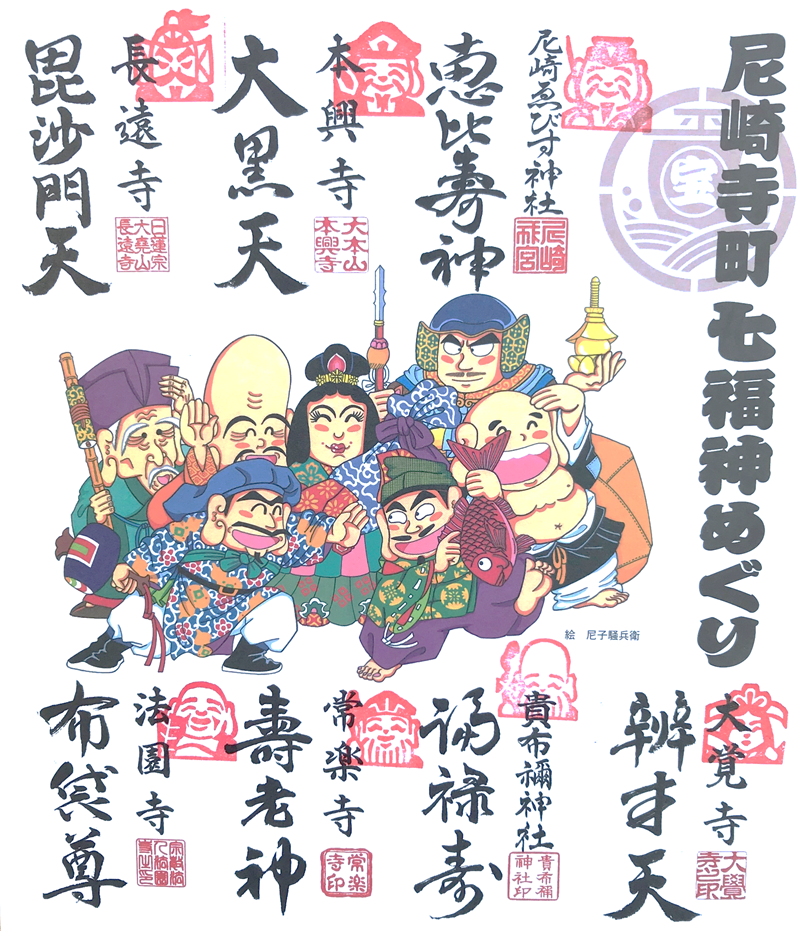
GOAL
Hotel Vischio Amagasaki
Return to the list of model courses
 Hotel Vischio Amagasaki HOME
- Tourist information
- Sightseeing itinerary
- Detailed sightseeing itinerary
Hotel Vischio Amagasaki
661-0976 Amagasaki City, Hyogo Prefecture
1-4-1 Shioe
TEL:06-6491-0002
FAX:06-6491-8575


© 2019 HOTEL VISCHIO AMAGASAKI. All Rights Reserved.