

-
1906
Founding period -
1913
During the era of the Imperial Japanese Government Railways -
1945
Public Corporation Era -
1956
Miyako Hotel Era -
1983–
Present
HISTORY OF
NARA HOTEL
The hospitality we offer today is
one chapter in a story
that began more than a century ago—
a story woven through time
and passed down
without interruption.
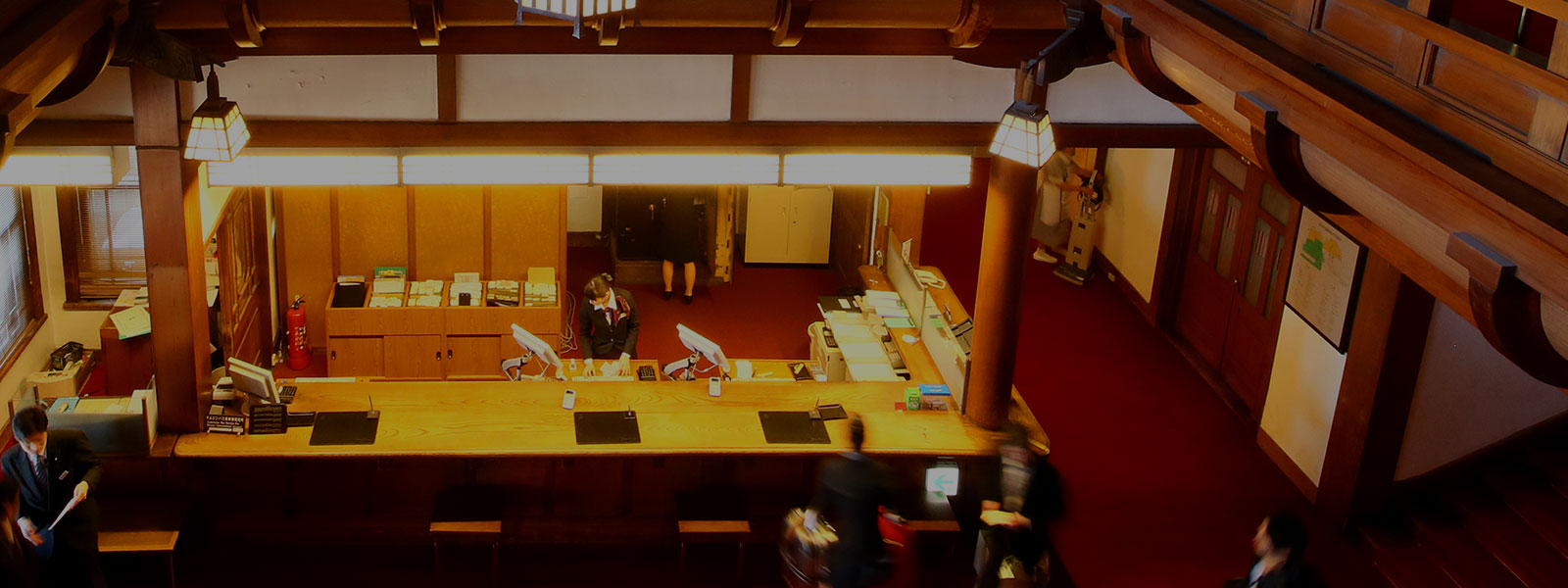
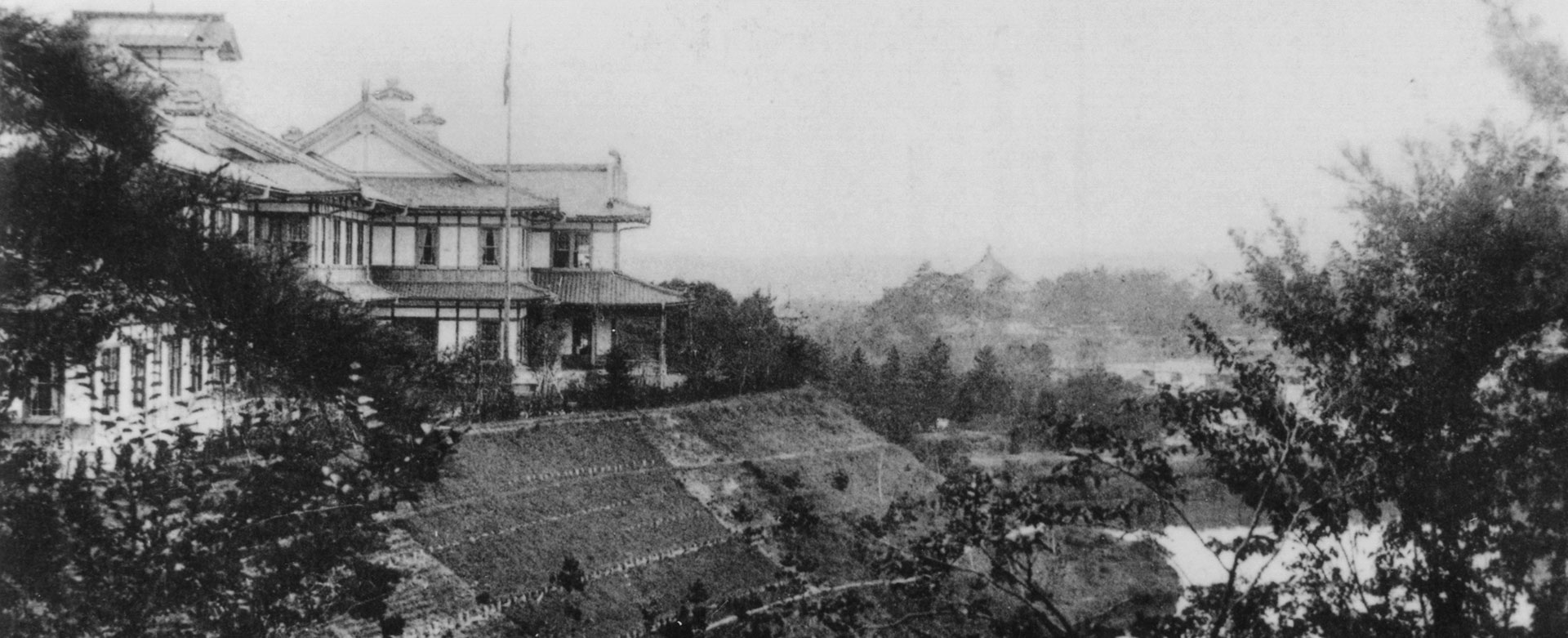
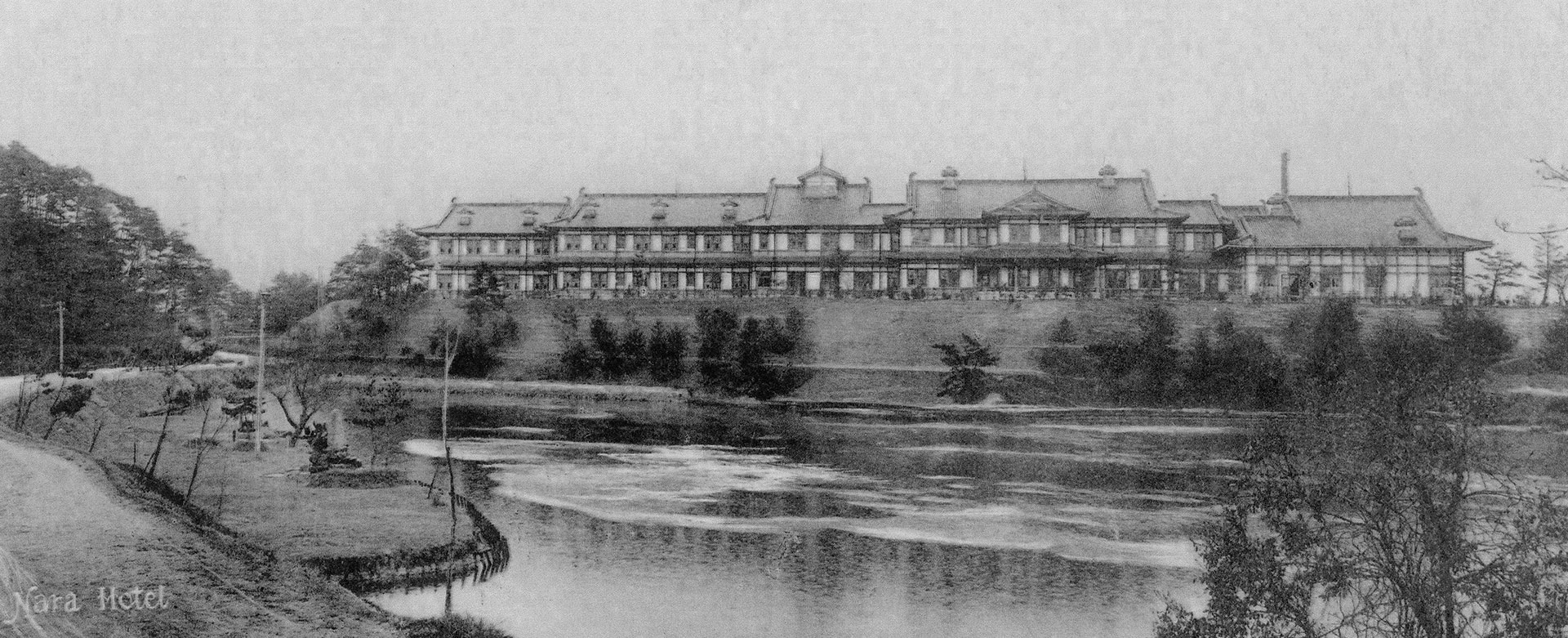
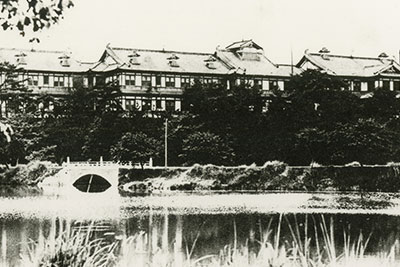
Often referred to as the State Guest House of the Kansai region, Nara Hotel served as a facility equivalent to a state guest house, welcoming distinguished guests including state dignitaries and members of the Imperial Family. The Main Building was designed by architect Kingo Tatsuno, who also designed Tokyo Station and the Bank of Japan Head Office. With its tiled roof, elegant harmony with the historic Yamato townscape, and its luxurious Momoyama-style interiors, the building embodies a magnificent fusion of Japanese and Western aesthetics. Its stately and graceful appearance continues to captivate visitors to this day.
Throughout its history, the hotel has experienced many changes brought about by the times. Yet, the enduring wish to preserve this cherished hotel has remained unchanged, carried forward from generation to generation to the present day.
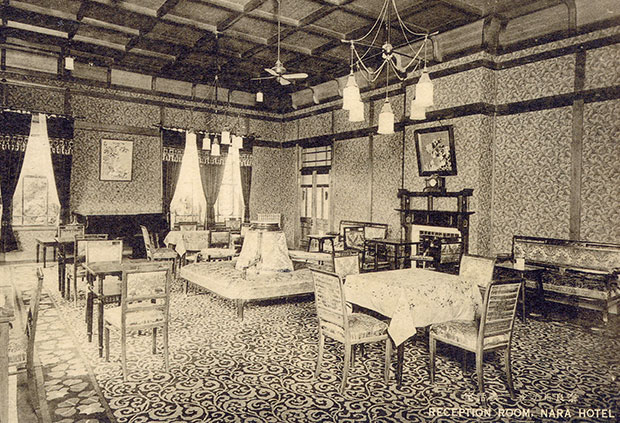
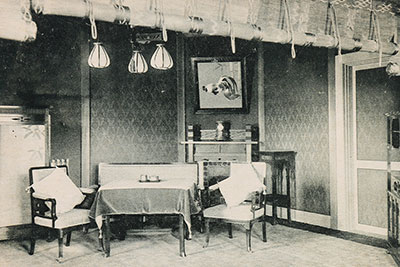
Nara Hotel Story
NARA HOTEL
STORY
Founding period to the era of Dai Nippon Hotel Co., Ltd. (1906-1913) (Meiji 39th year to Taisho 2nd year)
1906~
The impetus for the construction of Nara Hotel began with Japan's victory in the Russo-Japanese War, and the hotel's history can be divided into five periods from the perspective of its operating entity.
Following Japan's victory in the Russo-Japanese War, the number of foreign visitors to Japan increased dramatically. As a result, the government gathered the owners of major hotels and inns throughout the country and announced that it would provide them with necessary protections and benefits.
In response, Kihachiro Okura (founder of the Imperial Hotel) took action in the Kanto region, and Jinbei Nishimura (founder of the Miyako Hotel) took action in the Kansai region.
In 1906, Nishimura acquired the Asukayama site in Takabatake-cho, which had excellent views, for 1 yen per tsubo (approximately 3.3 square meters), and the following year, in 1907, he established the Dai Nippon Hotel Co., Ltd., which merged four hotels, including the Miyako Hotel.
The construction of Nara Hotel was carried out by the Railway Bureau, and it cost 350,000 yen, about twice the cost of constructing the Rokumeikan.
In accordance with a prefectural assembly resolution stating that "harmony with existing buildings should be maintained when constructing new buildings," a blend of Japanese and Western architectural styles was adopted, resulting in a magnificent building that harmonizes with the surrounding landscape.
On October 17, 1909, Nara Hotel opened.
After opening, it had 50 to 60 employees for only 4 to 5 guests a day, and business was not going well. Nishimura appealed to the Railway Ministry about the dire situation, but was unable to obtain subsidies, and the Dai Nippon Hotel Co., Ltd. closed down in less than four years after opening, and in May 1913, the Railway Ministry took over its management.
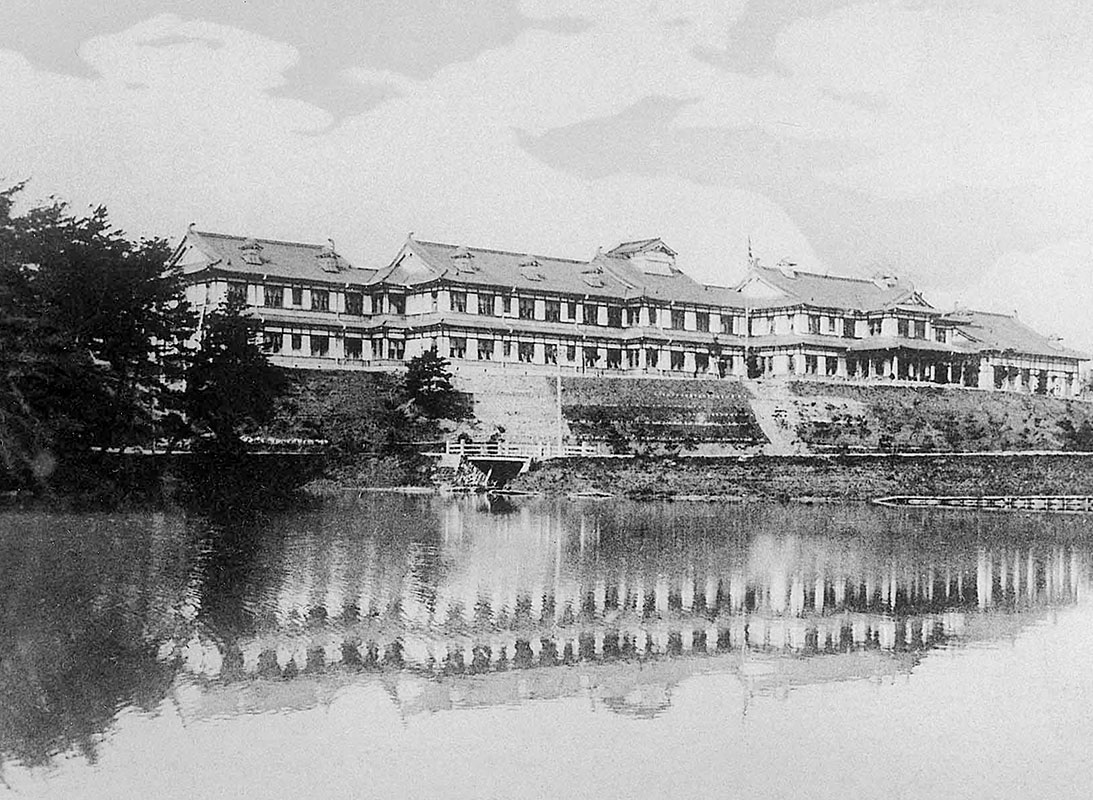
Overall view of the construction site
Hotel history (1906-1913)
- Nara City, Kansai Railway Co., Ltd., and Jinbei Nishimura exchanged a memorandum of understanding regarding the construction of a hotel.
- Jinbei Nishimura purchased land for a hotel in Takahata-cho, Nara City, and registered the business name as "Nara Hotel."
- The Dai Nippon Hotel Co., Ltd., managed by Jinbei Nishimura, was established.
- Kansai Railway Co., Ltd. purchased land for Nara Hotel from Dai Nippon Hotel Co., Ltd.
- The Nationalization Law for Railways was enacted, Kansai Railway Co., Ltd. was acquired by the Railway Institute, and Nara Hotel site became the property of the Railway Institute.
- Main Building was completed, and Nara Hotel began operations under the management of Dai Nippon Hotel Co., Ltd. (the Railway Institute was the landlord).
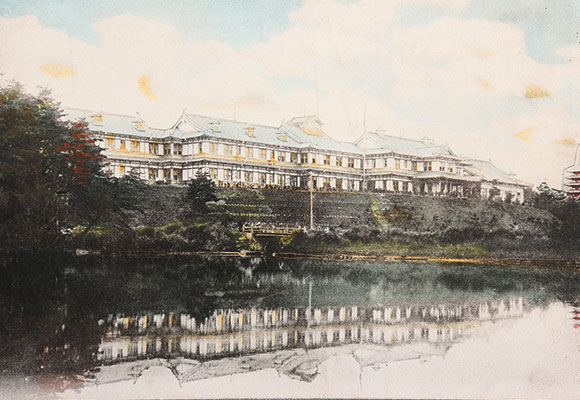
Overall view of the construction site
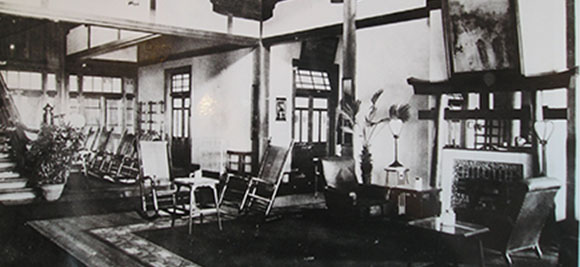
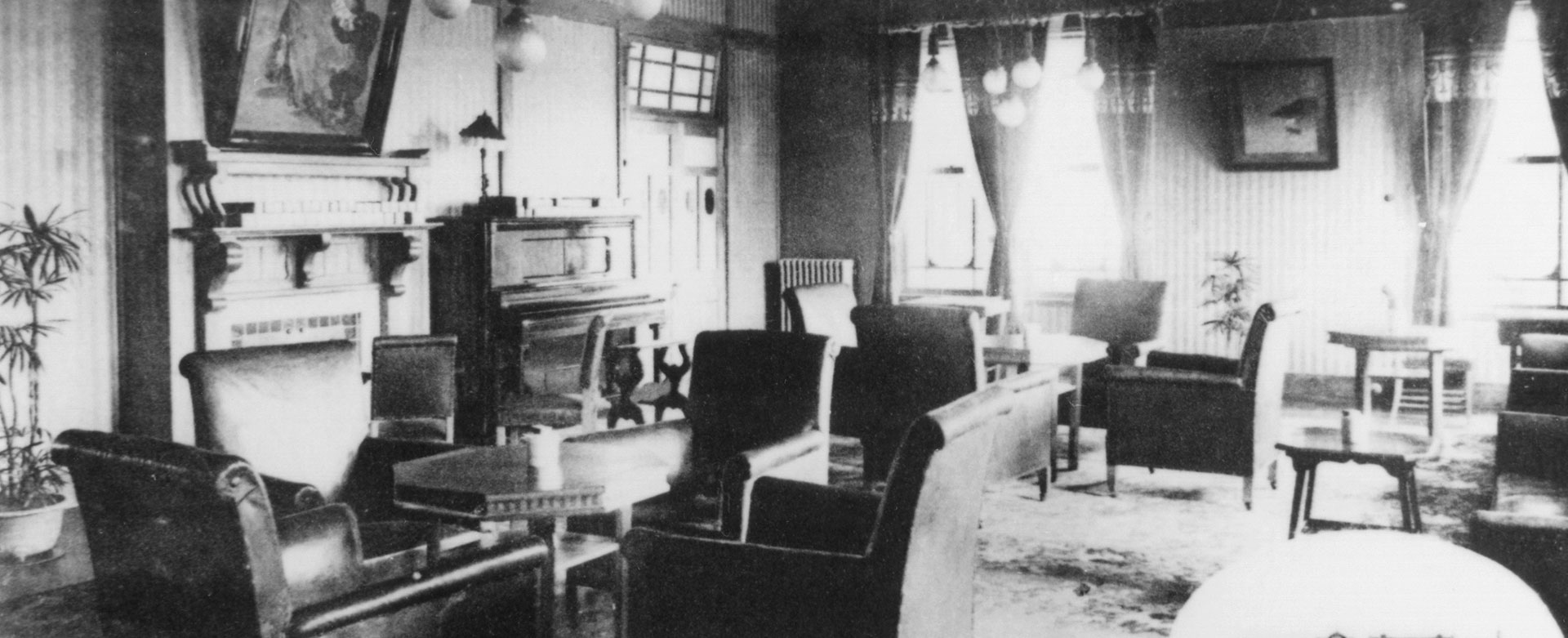
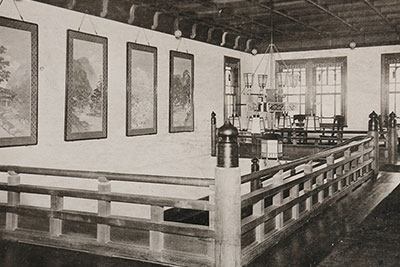
The entrance lobby at the time of opening.
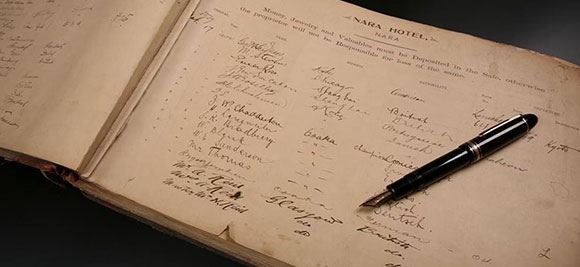
The register book from that time still exists today.
The era of direct operation by the Railway Institute/Ministry of Railways: 1913-1945 (Taisho 2 to Showa 20)
1913~
During this period, Japan experienced a turbulent era, marked by World War I, the Manchurian Incident, World War II, and ultimately, defeat. Meanwhile, Nara Hotel, under the generous patronage of the Railway Institute, enjoyed its most glamorous era, far removed from the outside world.
As a state-owned hotel, it was not driven by profit, and the principle of "high-ranking government officials or executives of companies with a certain amount of capital or higher" was strictly adhered to. It is said that even when there were many vacant rooms, guests were often turned away as if the hotel were fully booked.
The treatment of the employees was such that an 18-year-old female room attendant was paid the same as her 32-year-old brother who worked for Sumitomo Metal. It seems that many daughters of good families worked there as apprentices to learn proper etiquette.
During this period, which could be called the era of a state guesthouse, Nara Hotel underwent renovations each time it welcomed a distinguished guest.
Among the world's most famous visitors to Nara Hotel were Prince Edward of Great Britain and Albert Einstein in 1922, Helen Keller in 1937, and many members of the imperial family and prime ministers of the time.
In the Showa era, the hotel gradually took on a more militaristic character, and it began to receive frequent visits from the Emperor of Manchukuo, leaders of the German Nazi Party, and leaders of the Italian Fascist Party.
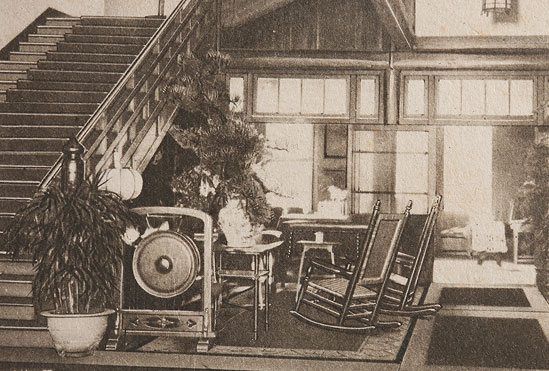
During the war, when an air raid siren sounded, they would sound a gong to alert the guests, who would then take refuge in air raid shelters.
The Railway Institute was transformed into the Ministry of Transport in May 1945, just before the end of the war, but in December of the same year, Nara Hotel 's assets were leased to the Japan Travel Bureau Foundation, and its operations were also entrusted to them.
Amidst these circumstances, Nara Hotel was requisitioned by the U.S. military.
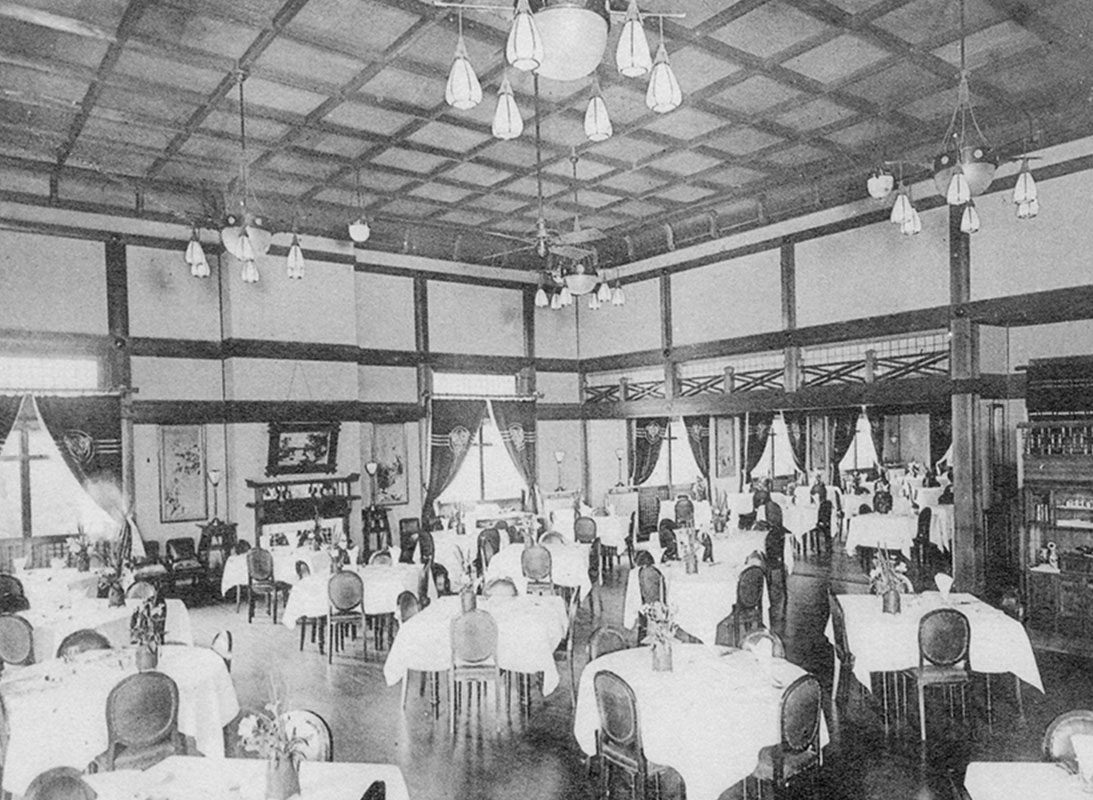
Inside the building at the time
Hotel history (1913-1945)
- It was directly operated by the Railway Institute.
- The VIP rooms were renovated, and the entire building was equipped with central heating (steam heating).
- New plumbing and wastewater treatment systems were installed throughout the entire building, and the chandeliers were replaced with the current ones.
- A joint bus in the east wing was constructed, and new tennis courts were constructed.
- A new mini-golf course has been constructed.
- New fire alarm systems have been installed throughout the entire building.
- Under the three-year plan, all guest rooms were newly decorated and furnished.
- Hotel metals were being collected as part of an emergency metal recycling effort.
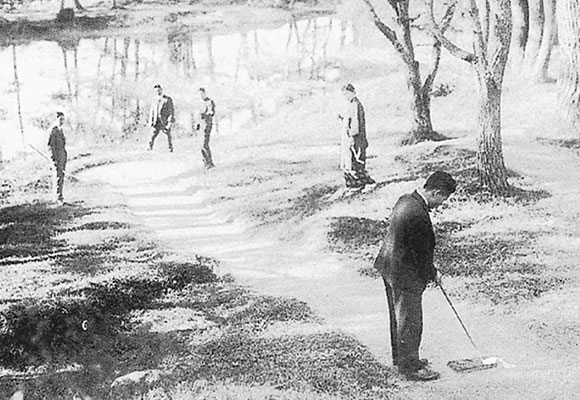
A mini golf course that was located in the former Daijoin Garden
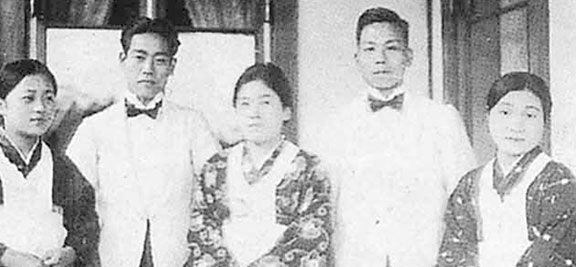
Around 1935,
all of our female staff were dressed in traditional Japanese clothing while providing service.
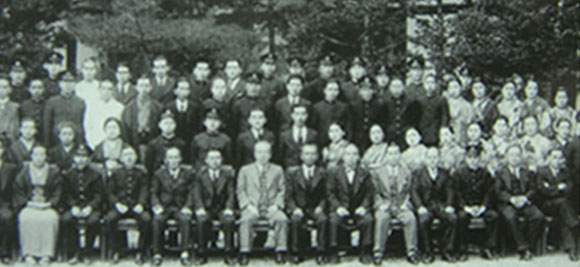
Employees from the pre-war era.
Many of them are wearing the uniform of the Railway Institute.
Public corporation era 1945-1956 (Showa 20 to Showa 31)
1945~
When Nara Hotel was requisitioned by the US military, a staff of 5-6 people, led by a US lieutenant to major, was permanently stationed there, and the Japanese employees were placed under the control of the US military as laborers. Initially, the US soldiers were on guard, even carrying shotguns during meals, but eventually they became friendly with the Japanese employees, and Nara Hotel became a fun recreational facility. During the US military occupation, the US soldiers were apparently kept under strict control, and Nara Hotel is said to have been a bright and healthy place. The employees were able to eat proper meals, albeit leftovers from the US soldiers, and their wages were apparently better than average. The US military staff also showed consideration for the Japanese employees by holding events, and many of the employees who were young at the time look back on that time as a fun time. After the occupation ended, the business situation was extremely difficult. Foreign guests plummeted, and Japanese guests still had a low standard of living, so the hotel was practically deserted. Unable to keep up with the deficit, in April 1954, the Japan Travel Bureau requested the return of its hotel operations to the Japanese National Railways (JNR), which had separated from the Ministry of Transport and been established independently. However, JNR was prohibited from engaging in hotel-related businesses at the time. Fortunately, Miyako Hotel Co., Ltd. offered to take over the operations, and the business was handed over to the new management in March 1956.
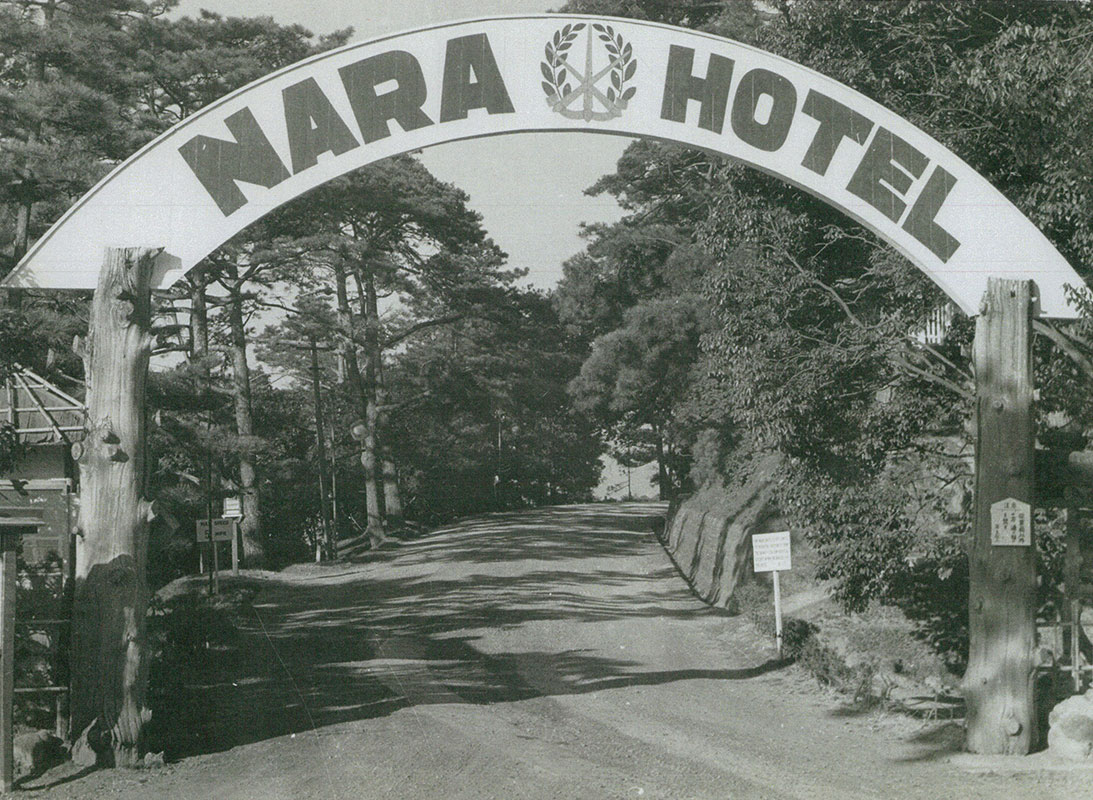
Nara Hotel during US military occupation
Hotel history (1945-1954)
- It became a recreational facility for the U.S. military, and its operation was entrusted to the Japan Travel Bureau Foundation.
- US military occupation ends.
- The hotel has reopened.
- The Japan Travel Bureau Foundation offered to return the hotel operations to the Japanese National Railways.
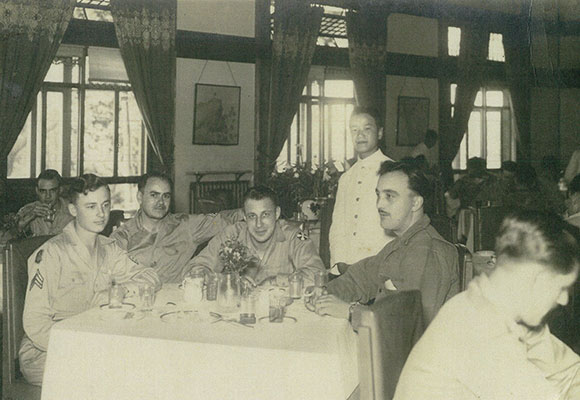
A scene from the restaurant during the time it was under U.S. military control.
Miyako Hotel Co., Ltd. era: 1956 - 1983 (Showa 31 - Showa 58)
1956~
It could be said that the true beginning of Nara Hotel 's operations started here. During the 10 years under the Japan Travel Bureau, including the period of occupation, investment in facilities was not possible, and the building deteriorated. However, with consideration from the Japanese National Railways, improvements were gradually made.
In the 1950s, Japan entered a period of rapid economic growth. The number of Japanese guests at the hotel increased, and in 1964, the Tokyo Olympics led to a surge in foreign guests. The hotel's business also improved.
In the 1960s, it underwent renovations in preparation for the World Expo, transforming from a pure resort hotel to a city hotel. The year of the Expo was bustling, with VIPs such as kings, princesses, and first ladies visiting two to three times a week. Although
business was on track, around 1980, concerns began to be raised about the hotel's future. These included the small number of guest rooms, the lack of a large banquet hall, and the aging of the wooden building.
In November 1982, the construction of New Building was approved by the Landscape Council, putting the facility expansion in sight.
On January 31, 1983, Nara Hotel Ltd. was established through a 50/50 joint venture between Japanese National Railways and Miyako Hotel, and operations under the new company began on April 1st.
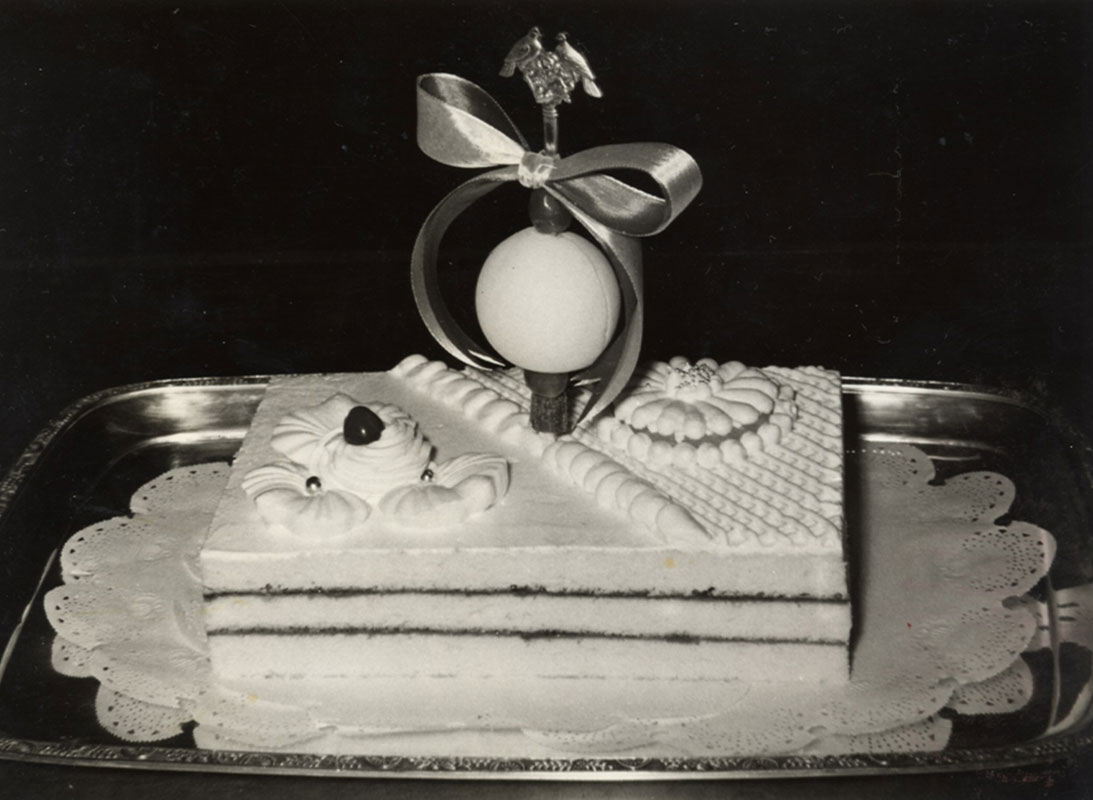
The Emperor and Empress's Cake
Hotel history (1956-1982)
- The hotel becomes Nara Hotel, operated by Miyako Hotel Co., Ltd. Construction of private bathroom facilities in each guest room begins.
- The restaurant at Nara International Golf Course has opened for business.
- Construction to install air conditioning throughout the entire building has begun.
- The veranda of the main dining room will be extended to create a dining area.
- It is designated as a special preservation area for historical landscapes under Article 4 of the Law for the Preservation of Ancient Cities.
- The balcony outside the Take-no-Ma room was expanded to create a lobby.
- The shared bathroom in the east wing was converted into Japanese-style Room.
- Requested approval from the Environment Council for the hotel major renovation plan for the Expo.
- The major redevelopment plan was rejected by the Scenic Beauty Council, so the plan was revised and construction will begin.
- An annex has opened at Kintetsu Nara Station. Two banquet halls and one grill have been added. Main Building communal bath and toilets have been renovated, and 22 guest rooms have been added.
- Kintetsu Department Store Nara branch opens its prepared food section.
- The Landscape Council approved the construction of New Building utilizing the southern slope.
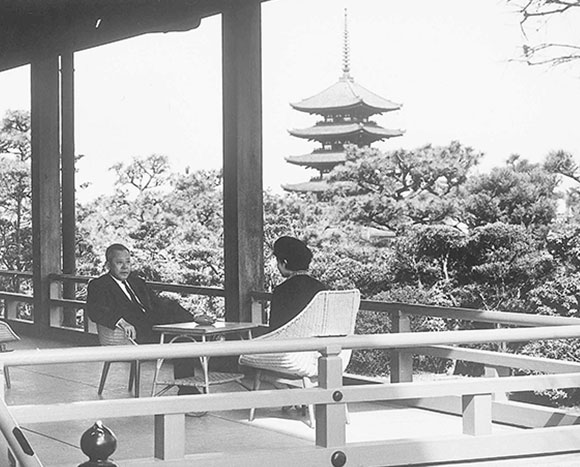
View from the balcony
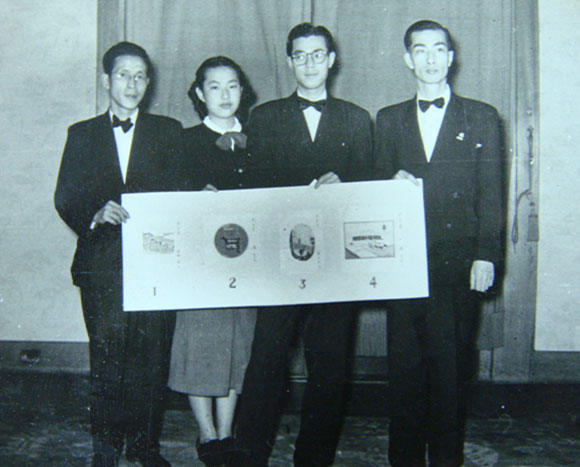
From the establishment of Nara Hotel Co., Ltd. to the present day (1983 -Showa 58)
1983~
The most urgent task for Nara Hotel Co., Ltd. was the construction of New Building. Construction began in August 1983, but due to its semi-basement design and the aim of achieving a very high standard, the total construction cost reached 2.4 billion yen, which was extremely expensive for an expansion project adding 65 guest rooms. The
first famous person to visit Nara Hotel Co., Ltd. was Audrey Hepburn. She visited on March 31, 1983, the day before Nara Hotel Co., Ltd. began operations, and praised the hotel repeatedly, calling it beautiful and wonderful.
The hotel suffered significant damage in the Great Hanshin-Awaji Earthquake in January 1995, but fortunately, the framework remained unaffected. This made us realize once again the strength of Meiji-era buildings.
In the Heisei era, the number of tourists visiting Nara decreased, and modern hotels rapidly increased in Osaka and Kyoto, making competition for wedding bookings fierce. To meet the needs of couples who wanted to have their wedding in a church, we decided to construct Chapel.
Since 1998, the hotel has undertaken projects such as the establishment of new restaurants and bars, and the holding of exhibitions of paintings from its collection. From 2006, a renovation plan was formulated, including the renewal of guest rooms, and the final stage of the plan, the renovation of the kitchen, was completed in September 2008.
In February 2009, the year of its 100th anniversary, the hotel held an exhibition of 20 paintings from its collection.
2010 was a year of great excitement throughout Nara Prefecture, with the "1300th Anniversary of the Transfer of the Capital to Heijo-kyo" celebrations taking place throughout the prefecture. For the hotel, it was a special year marking the first step towards the next 100 years. The first thing the hotel tackled was the repair of a Steinway piano made in 1922, which had become one of its furnishings.
After repairs that took approximately six months, the body color was restored to a lacquered mahogany red, reminiscent of its former glory.
In August 2013, the renovation of Lounge "The Bar," which had been underway since June of that year, was completed. In October, two Japanese-style rooms Main Building Japanese-style Room, which had begun renovations around the same time as the bar, were reborn as the Parkside Twin room "Tenpyo" and "Asuka."
Based on the Act on Promotion of Seismic Retrofitting of Buildings, which came into effect in November of that year, reinforcement work began in 2015, starting with the lobby and banquet halls, which form the connecting area between New Building and old buildings.
In April 2015, the renovated Large banquet room "Kongou" and the newly constructed rooftop terrace garden were opened to the press. On December 4 of the same year, the Japanese restaurant "Hanagiku" was relocated to the ground floor and reopened with a new look.
In 2016, the space formerly occupied by "Hanagiku" was expanded to become part of the adjacent New Building banquet hall "Yamato." This resulted in a banquet hall capable of accommodating a wide range of banquet needs, including large-scale business use.
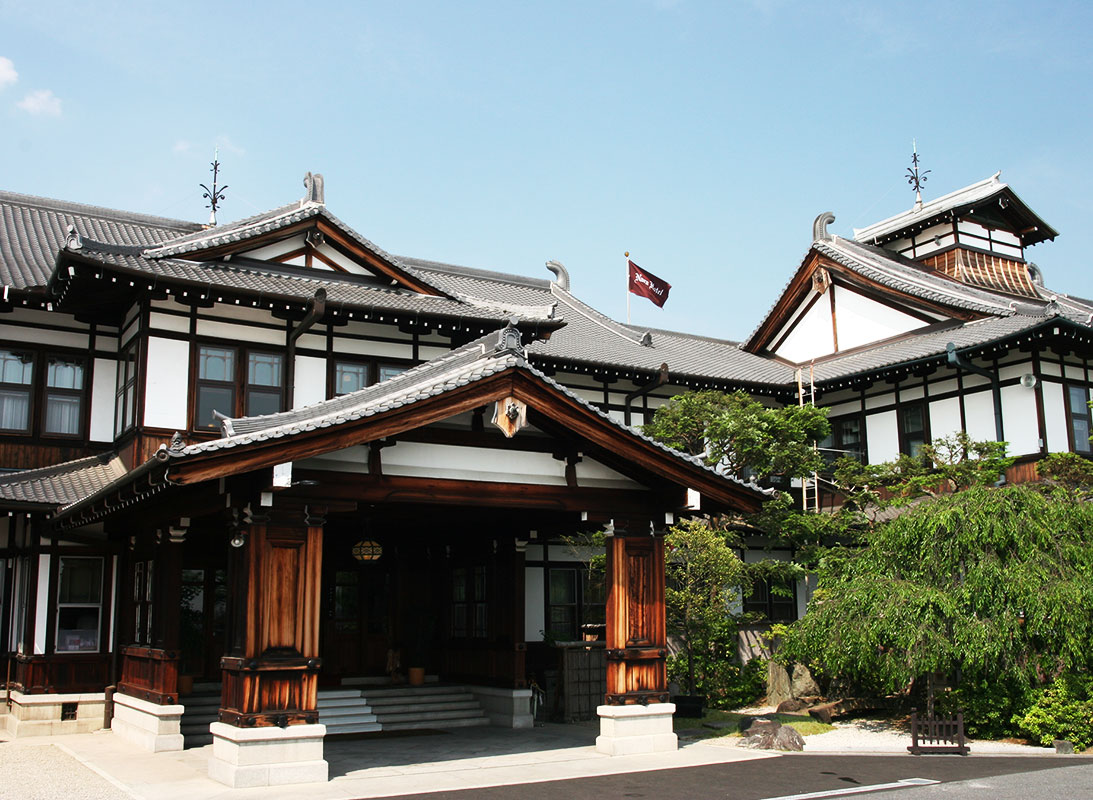
Current exterior of Nara Hotel
Hotel history (1983–present)
- Nara Hotel Co., Ltd. was established.
- Nara Hotel Co., Ltd. begins operations.
- The lobby outside the Take no Ma room was remodeled into a TEA LOUNGE.
- Groundbreaking ceremony New Building.
- When the Japanese National Railways (JNR) was reorganized into JR, the land, buildings, and shares owned by JNR were transferred to JR West.
- Nara Silk Road Expo was held.
- A restaurant called "Noh" has opened inside the new prefectural public hall in Nara Park.
- King Carl Gustaf XVI of Sweden visited our hotel.
- Comprehensive restoration work on paintings and other works of art began. It was largely completed in March 1991.
- Complete renovation of the Imperial Suite.
- To celebrate the enthronement, a commemorative "Heisei Grand Clock" has been installed in the "Sakura" of the hotel.
- Nara Hotel Withdrawal from the annex.
- Václav Havel, President of the Czech and Slovak Federal Republic, and Mrs. Havel visited Nara Hotel.
- His Royal Highness The Duke of Kent visited Nara Hotel.
- The hotel was damaged in the Great Hanshin-Awaji Earthquake.
- Renovation work on the wooden Main Building (roof, exterior walls, interior, etc.) has been completed.
- "THE BAR" opens (August 27th), Grill Zedder is renovated and reopened as the Japanese restaurant "Hanagiku" (September 8th).
- Main Building Guest Rooms Reopen After Renovation.
- New Building Guest Rooms Reopen After Renovation.
- Renovation work of the Main Building 's kitchen is complete.
- 100th anniversary of founding. (10/17)
- Withdrew from the "Noh" restaurant at the Nara Prefectural New Public Hall in Nara Prefecture.
- The 1300th anniversary of the relocation of the capital to Heijo-kyo was celebrated.
- The "Souvenir shop" has been relocated and renovated, and the renovation work on "THE BAR" has been completed.
- The Japanese-style Room in the Main Building have been renovated into "Parkside Twin room".
- The interior of the "Kongo" Banquet Hall in the New Building was renovated, and the Terrace Garden was newly opened on the fifth floor (ground level) of the New Building.
- The Japanese restaurant "Hanagiku" has relocated and reopened on the 5th floor of the New Building. (12/4)
- We have withdrawn from the Nara International Golf Course restaurant.
- Expansion work on the "Yamato" banquet hall New Building has been completed.
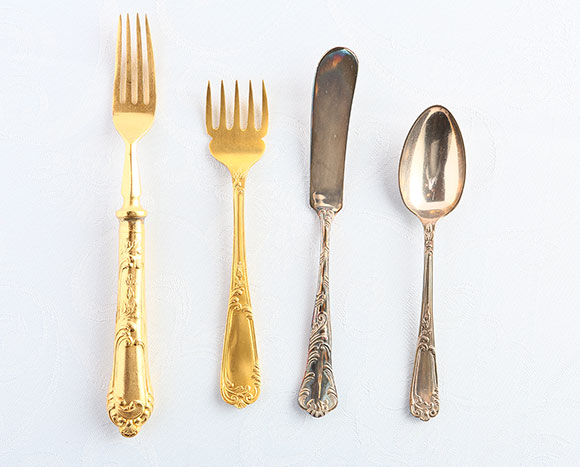
Silverware discovered in a warehouse in May 2013.
It was identified as having been inherited from the Nagasaki Hotel
when Nara Hotel was founded.
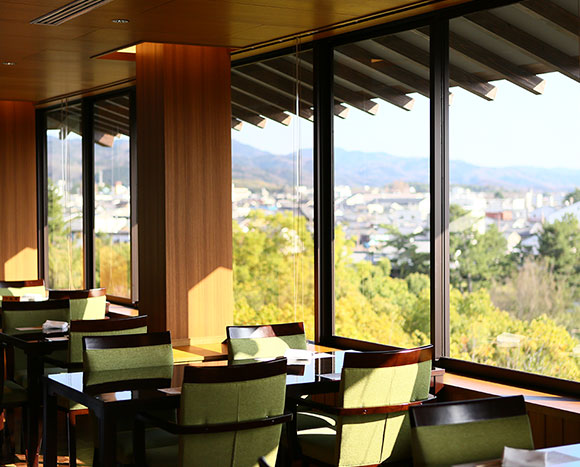
The renovated Japanese restaurant "Hanagiku".
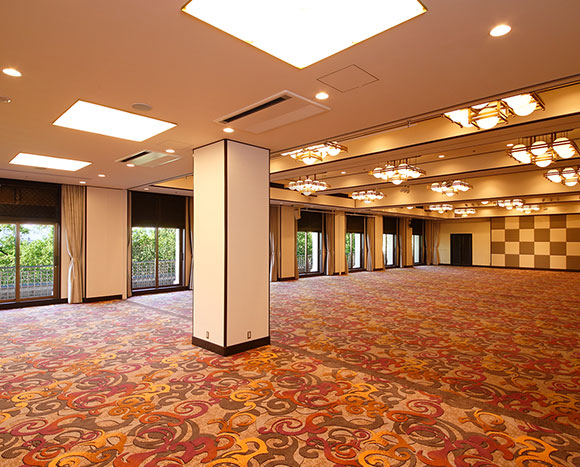
The largest banquet hall, "Yamato" has been expanded.