How to spend your time Aotani Yoshinara
Aotani Yoshi (a type of rice) - Winter in Nara
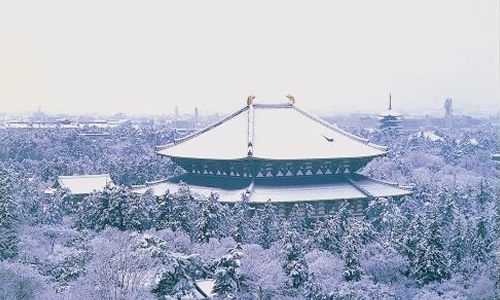
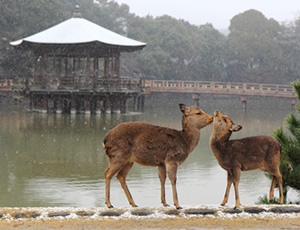
A fine winter day, a beautiful day in Nara.
Nara, located in a basin, experiences cold winters, but boasts a high percentage of sunny days, making it an ideal time to enjoy sightseeing at a leisurely pace.
Please dress warmly.
A traditional event that concludes the year.
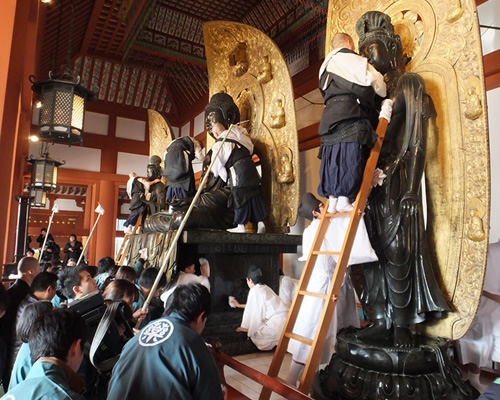
Body cleansing / Yakushiji Temple
This is a ritual to sweep away dust from the Buddha statues as we welcome the new year.
In the morning, mochi rice cakes for the New Year are made, and the monks use the hot water from that process to wipe and purify the Buddha's body with a clean cloth.
After the Yakushi Nyorai, Nikko Bosatsu, and Gekko Bosatsu statues in the main hall are cleaned, the cleaning of the statues in the other halls, such as the Great Lecture Hall and the East Hall, will continue.
Students from all over the country gather to serve as the Yakushiji Youth Group, assisting the monks.
[Date] December 29th
[Location] Inside the main hall of the Hakuho-era temple complex at Yakushi-ji Temple
[Time] 13:00~
[Access] Approximately 25 minutes by car from the hotel.
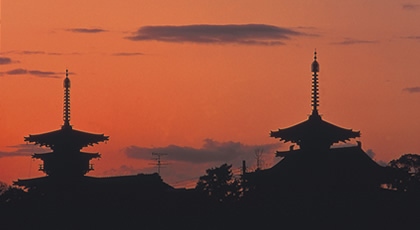
The New Year is welcomed with the sound of a large bell.
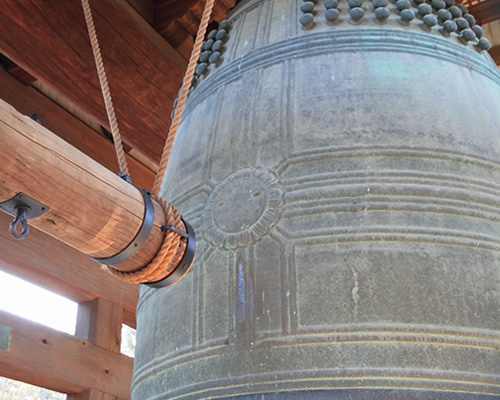
New Year's Eve Bell / Todai-ji Temple
The sound of a large temple bell (tsurigane), said to have been cast in 752 Tenpyo, rings out on New Year's Eve.
The ringing of the New Year's Eve bell is open to the public (first-come, first-served basis).
[Date and Time] January 1st, 0:00 onwards
[Location] Todai-ji Temple Bell Tower
[Access] Approximately 15 minutes by taxi and on foot from the hotel.
The Great Bell of Todai-ji Temple
The bell at Todai-ji Temple is 3.86m tall, 2.71m in diameter, and weighs 26.3 tons. The clapper is made of zelkova wood, is 4.48m long, 30cm in diameter, and weighs 180kg, or about 200kg including the metal fittings. At Todai-ji Temple, it is called the "Great Bell" (Ōgane).
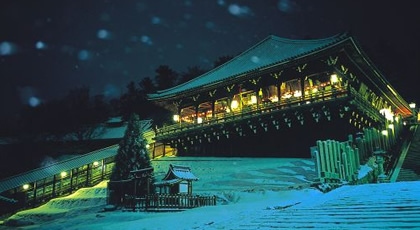
To those who wish to participate in the "New Year's Eve Bell Ringing" at Todai-ji Temple
Participation is on a first-come, first-served basis. Eight small ropes are attached to a long mallet, and groups of about eight people pull the ropes. Over 800 people can participate, but we have prepared commemorative printed materials for each participant, and the end of the line will be where the printed materials have been distributed.
Distribution time for printed materials: Around 10:30 PM on December 31st (scheduled)
*The order may vary.
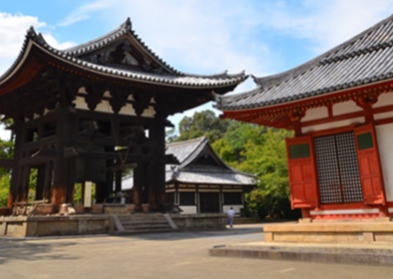
Don't miss it! A truly moving moment.
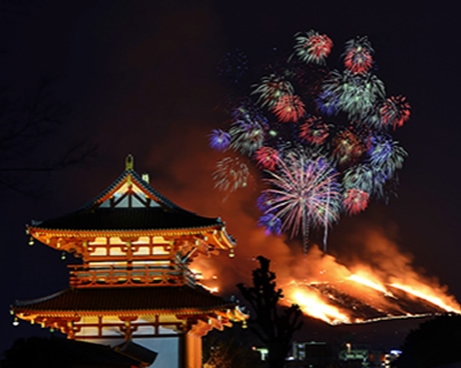
Wakakusayama burning
Wakakusayama is a mountain with an elevation of 342m located east of Nara Park.
There are various theories about the origin of mountain burning, but it has been practiced since before the Edo period and became an official event after the Meiji era.
[Date] Fourth Saturday of January
[Location] Wakakusayama area within Nara Park
[Time] Fireworks from 18:15, mountain burning from 18:30
[Access] You can see it from the Nara Park area.
*If ignition fails, the event will be postponed.
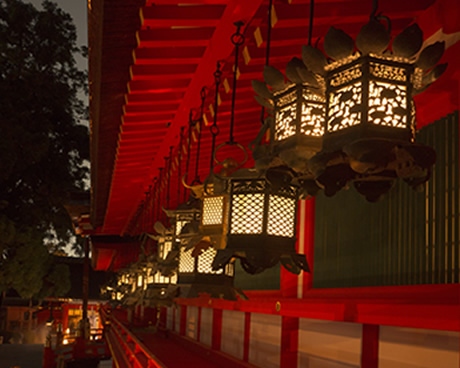
Setsubun Lantern Festival / Kasuga Taisha Shrine
Many of the lanterns were donated by the public from the late Heian period onward, with prayers for family safety, business prosperity, and other blessings. Approximately 3,000 lanterns are lit during the event, when a purifying fire is offered and prayers are made.
[Date] Setsubun Day
[Location] Kasuga Taisha Shrine
[Time] Lights turn on around 18:00 / Gates close around 20:30
[Access] Approximately 7 minutes by car or 20 minutes on foot from the hotel.
Event Schedule for December/January/February/March
Long-term events from December to March
Mid-February to mid-March: Bonsai Plum Blossom Exhibition / Sugawara Tenmangu Shrine
March 1st-14th: Shuni-e Ceremony / Todai-ji Temple, Nigatsu-do Hall
March 25th - March 31st: Hanae-shiki (Flower Festival) / Yakushiji Temple
December
| 14th | Buddhist Name Ceremony / Todai-ji Temple, Nigatsu-do Hall |
|---|---|
| 15th | Body Cleansing / Toshodai-ji Temple |
| 15th-18th | Kasuga Wakamiya On-matsuri Festival / Kasuga Grand Shrine |
| 22nd | Winter Solstice Festival (Prayer for Protection Against Stroke) / Shoryaku-ji Temple |
| 29th | Body cleansing / Yakushiji Temple |
| 31st | Great Purification Ceremony / Kasuga Grand Shrine |
January
| Day 1 | Free admission to the Great Buddha Hall of Todai-ji Temple |
|---|---|
| 1-3 days | Shushōe Auspicious Repentance Ceremony / Yakushiji Temple |
| 3 days | Kagura Hajime-shiki (Shinto ritual dance) / Kasuga Taisha Shrine |
| 7th | Shushō-e (New Year's Ceremony) / Tōdai-ji Temple Great Buddha Hall |
| 11th | Bugaku Hajime-shiki (New Year's Dance Ceremony) / Kasuga Taisha Shrine |
| 15th | New Year's Grand Tea Ceremony / Saidaiji Temple |
| 23rd | Cancer Prevention and Bamboo Sake Festival / Daianji Temple |
| 28th | Wakakusayama Burning Ceremony / Wakakusayama, Nara Park |
February
| Setsubun Day | Setsubun Lantern Festival / Kasuga Taisha Shrine |
|---|---|
| 3 days | Setsubun Fire Ritual / Gangoji Temple |
| 3 days | Setsubun (bean-throwing festival) / Todai-ji Temple Nigatsu-do Hall |
| 3 days | Setsubun Festival and Lucky Star Festival / Daianji Temple |
| 15th | Nirvana Ceremony / Kofuku-ji Temple |
| 25th | Onda Festival / Sugawara Tenmangu Shrine |
March
| 9th | Doll memorial service/Shorakuji Temple |
|---|---|
| 13th | Kasuga Festival (Monkey Festival) / Kasuga Grand Shrine |
| 15th | Rice Planting Ritual / Kasuga Grand Shrine |
| Vernal Equinox | Brush Festival / Sugawara Tenmangu Shrine |
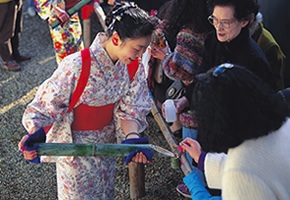
Cancer Prevention and Bamboo Sake Festival / Daianji Temple
Emperor Kōnin, in his youth, is said to have enjoyed the refined pleasure of warming sake in the forest at Daianji Temple. It is believed that this practice helped him maintain good health and longevity, and he ascended to the throne at the age of 62. This event is based on that anecdote of the emperor. Prayers for protection against cancer are offered, and sake is served, attracting many people.
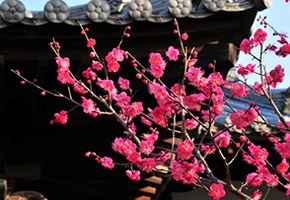
Bonsai Plum Blossom Exhibition / Sugawara Tenmangu Shrine
The poem, "When the east wind blows, send forth your fragrance, O plum blossoms, do not forget spring, even though your master is absent," was composed by Sugawara no Michizane when he was appointed to Dazaifu. The "Bonsai Plum Blossom Exhibition" is held in Sugawara no Sato, the birthplace of the Sugawara family and considered to be the birthplace of Michizane. The rich fragrance of plum blossoms from ancient and giant trees, carefully cultivated with dedication, heralds an early arrival of spring.
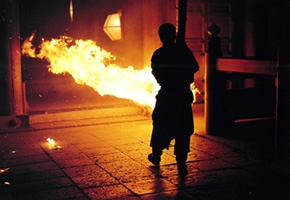
Shuni-e Ceremony / Todai-ji Temple Nigatsu-do Hall
Founded in the fourth year Tenpyo Shōhō era, this event has continued without interruption for over 1260 years. It is also called "Omizutori" (water drawing) because of the ritual of drawing sacred water from a well to offer to Kannon (Goddess of Mercy). Every night during the main ceremony, large torches are lit to illuminate the path of the monks performing the ritual.
*The torch procession on March 12th will be extremely crowded, and waiting times will be very long.
*Depending on the crowd situation, you may not be able to see the "Omatsutai" (torch procession).
Latest Articles
Category
archive
2026年(39)
2025(8)
2024(32)
2023(23)
2022(21)
2021(4)
2020(6)
2019(2)
2018(5)
2017(2)
2016(4)